








What's Happening?
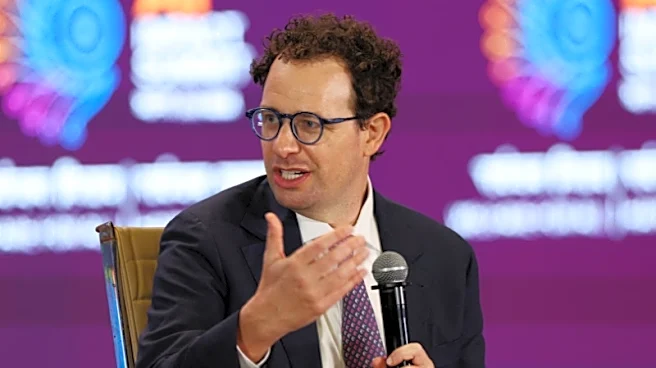
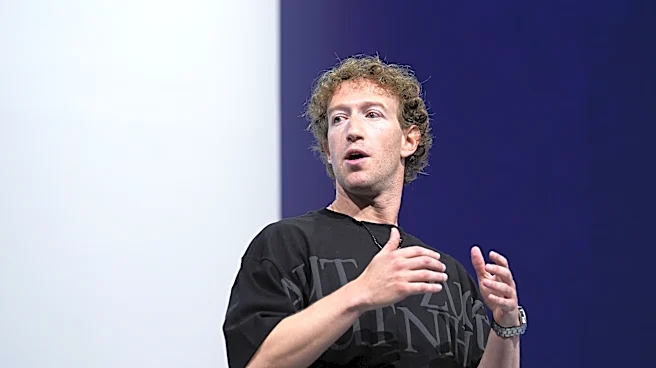
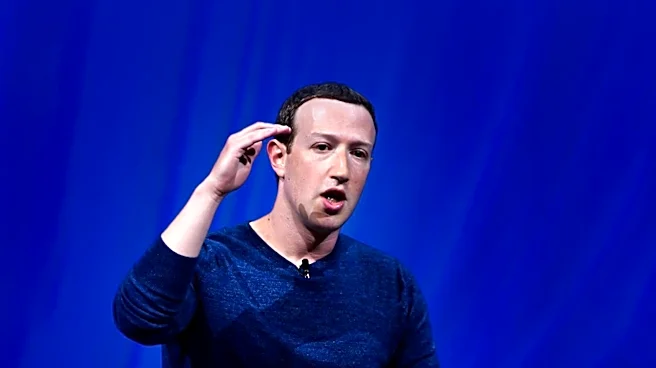
Meta Platforms CEO Mark Zuckerberg has publicly stated that artificial intelligence companies should determine their own pace for developing AI, rather than coordinating an industry-wide slowdown. His comments, shared on X, come amidst growing debate
regarding the management of risks associated with increasingly capable AI systems. Zuckerberg emphasized that AI developers have strong incentives to build safeguards into their products due to competitive pressures and potential liability for harm. He cited Meta's decision to delay the release of its Muse AI technology to complete additional safety and security work as an example of independent risk management. This stance aligns with views expressed by Nvidia CEO Jensen Huang, who also opposes coordinated efforts to slow AI progress, suggesting that companies can address safety concerns autonomously while continuing development.
Why It's Important?
This position from a prominent U.S. tech leader like Mark Zuckerberg is significant for the future trajectory of artificial intelligence development and regulation. His argument against a coordinated slowdown underscores a belief in market-driven innovation and self-regulation within the tech industry. This approach could lead to faster advancements in AI, but also places a greater onus on individual companies to ensure the ethical and safe deployment of their technologies. For the U.S. economy, a rapid pace of AI development could foster technological leadership and create new industries and jobs. However, it also intensifies the debate around the need for external oversight and regulatory frameworks to mitigate potential societal risks, such as job displacement, algorithmic bias, and misuse of powerful AI systems. The competitive landscape among U.S. tech giants in AI development is likely to remain intense, with safety and trust potentially becoming key differentiators.
What's Next?
The debate over the pace and regulation of AI development is expected to continue, with leaders like Zuckerberg advocating for independent company-led safety measures. This could lead to a fragmented approach to AI governance, where different companies implement varying levels of safeguards. It will be important to observe whether calls from other AI leaders, such as Anthropic CEO Dario Amodei, for greater coordination gain traction, potentially leading to industry-wide standards or governmental intervention. The U.S. government and international bodies may face increased pressure to establish clear guidelines or regulations for AI development and deployment, especially as AI systems become more powerful and integrated into critical sectors. The emphasis on trust, alignment, and responsible deployment as future differentiators suggests that companies will increasingly invest in these areas to gain a competitive edge and public confidence.
Beyond the Headlines
The deeper implications of Zuckerberg's stance touch upon the philosophical and ethical dimensions of technological progress. His argument for independent pacing reflects a Silicon Valley ethos of rapid innovation and minimal external interference. However, the increasing power of AI systems raises fundamental questions about corporate responsibility versus societal well-being. The potential for AI to reshape labor markets, influence public discourse, and even impact national security necessitates a broader conversation beyond individual company incentives. This debate highlights the tension between fostering innovation and ensuring responsible development, a challenge that will define the coming decades. It also underscores the importance of public education and engagement to ensure that the benefits of AI are widely shared and its risks are effectively managed, potentially leading to new models of public-private collaboration in technology governance.