





What's Happening?
China has formally urged France to immediately halt the implementation of its new law targeting ultra-fast fashion, describing the measure as discriminatory. The law, which came into effect on Tuesday, imposes a rising contribution fee on producers of qualifying
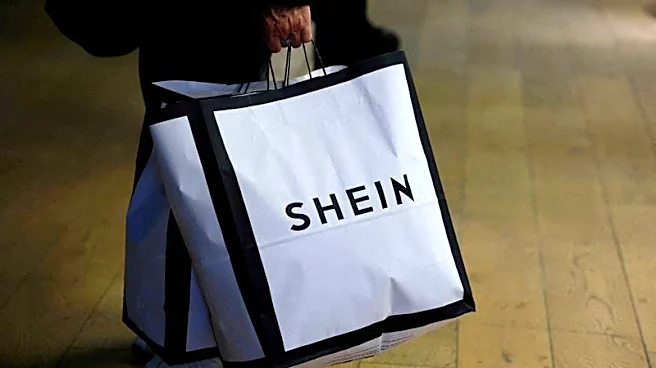
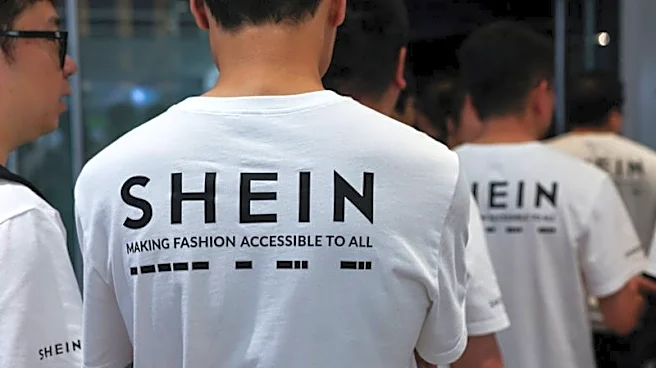
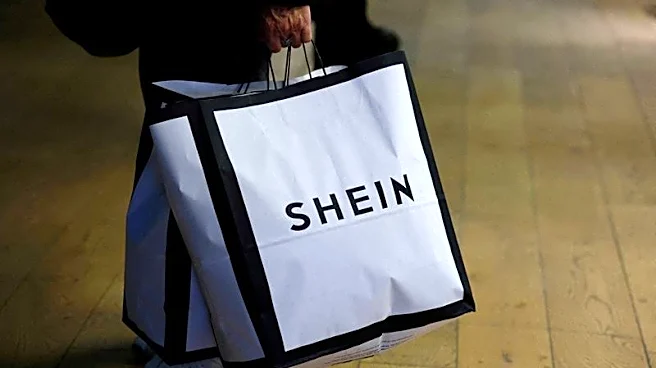
clothing, footwear, and household linen sold through ultra-fast-fashion business models. This fee ranges from €0.25 to €12 per item in 2026, with a maximum of €20 by 2030. The legislation specifically impacts major e-commerce platforms such as Shein, Temu, and AliExpress. Chinese commerce ministry spokeswoman Huang Ling expressed "strong dissatisfaction" with France's decision, asserting that the legislation uses environmental and sustainability standards to apply double standards and may violate World Trade Organization (WTO) rules on non-discrimination. Huang warned that if France insists on proceeding, China will take "necessary measures to safeguard the legitimate rights and interests of Chinese enterprises" and that "France will bear all consequences arising from this."
Why It's Important?
This dispute highlights a growing tension in international trade, particularly concerning environmental regulations and their impact on global supply chains. France's law aims to reduce the fashion industry's environmental footprint and protect its domestic clothing sector from the influx of low-cost products, primarily from Chinese ultra-fast fashion giants. China's strong reaction underscores its perception that these environmental regulations are a form of protectionism disguised as sustainability efforts, potentially creating non-tariff barriers to trade. The threat of retaliation from China could lead to a trade dispute between the two nations, potentially escalating to the European Union level. This situation is significant for U.S. businesses and consumers as well, as it could set a precedent for how other countries, including the U.S., might approach regulating ultra-fast fashion. If similar laws are adopted elsewhere, it could impact the availability and pricing of popular fast fashion brands, influencing consumer choices and the global retail landscape. It also raises questions about the balance between environmental protection, fair trade practices, and national economic interests.
What's Next?
The immediate next step will likely involve diplomatic exchanges between China and France, potentially through the WTO, where China may formally challenge the French law. France, supported by its environmental and domestic industry protection goals, is expected to defend its legislation. The European Union's stance will be crucial, as a unified European response could either de-escalate or intensify the dispute. If China follows through on its threat of "necessary measures," it could impose retaliatory tariffs or other trade restrictions on French goods, affecting various sectors beyond fashion. This could lead to a broader trade conflict, impacting global supply chains and potentially increasing costs for consumers. The situation also puts pressure on ultra-fast fashion companies like Shein and Temu to adapt their business models or face increased operational costs, which could be passed on to consumers or affect their market share. The outcome of this dispute could influence future international regulations on environmental sustainability in trade and the balance of power between national sovereignty and global trade rules.
Beyond the Headlines
The clash over France's fast fashion law delves into deeper ethical and economic considerations beyond immediate trade disputes. It highlights the environmental cost of rapid consumption and the challenges of achieving sustainability in a globalized economy. Ultra-fast fashion's business model, characterized by frequent new product introductions and low prices, contributes significantly to waste and carbon emissions. France's law attempts to internalize these external environmental costs, pushing companies to adopt more sustainable practices. However, China views this as a barrier to its economic growth and the competitiveness of its industries. This conflict also brings to light the complex issue of corporate responsibility in global supply chains, particularly regarding labor practices and environmental impact in manufacturing countries. The debate forces a re-evaluation of consumer culture, encouraging a shift from disposable fashion to more durable and ethically produced goods. Ultimately, this dispute is a microcosm of the larger global challenge: how to reconcile economic development and trade liberalization with urgent environmental imperatives and fair labor standards, without resorting to protectionist measures that could harm international relations and global economic stability.