
What's Happening?
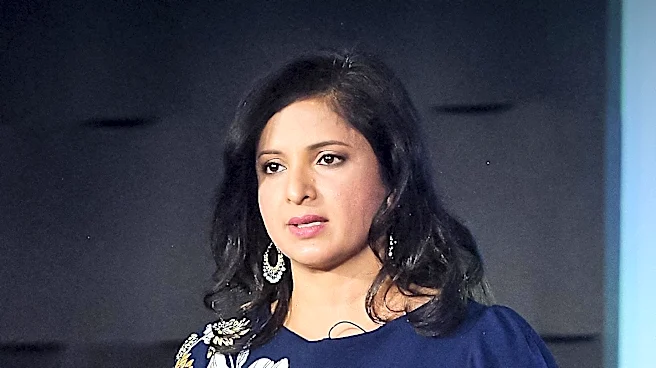
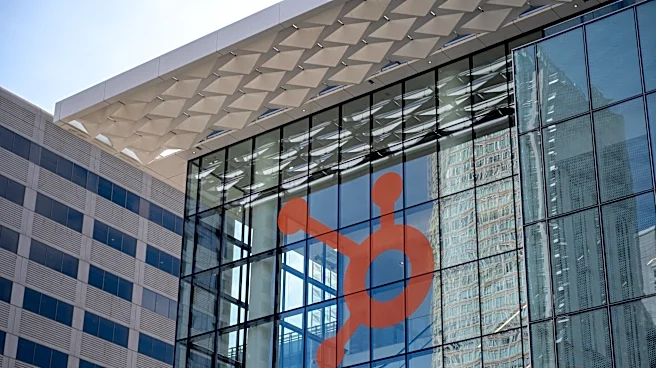
Brian Halligan has returned as the CEO of HubSpot, effective November 12, 2026, replacing Yamini Rangan, who stepped down and left the company's Board. Halligan, a co-founder who previously led HubSpot for
16 years, aims to rebuild the company around a 'customer relationship harness' and 'Headless HubSpot,' focusing on AI agents. Rangan will assist with the transition until December 1. This leadership change follows a 7% staff reduction and a projected slowdown in revenue growth, with a Q4 forecast of 12% revenue growth, down from 17% in Q3. Additionally, Karen Burgess, CFO of Adobe’s Creativity & Productivity unit, will join HubSpot as EVP, Finance on November 30, 2026, and will assume the CFO role on February 11, 2027, replacing the retiring Kate Bueker. HubSpot's customer count grew significantly under Rangan, from approximately 135,000 to over 311,000, and revenue increased from $1.3 billion in 2021 to an expected $3.7 billion in 2026.
Why It's Important?
This leadership transition at HubSpot is significant for the U.S. business landscape, particularly within the software and customer relationship management (CRM) sectors. Halligan's return signals a strategic pivot for HubSpot, moving away from a seat-based software model, which is experiencing a pullback from buyers, towards an AI-centric approach. This shift could redefine how CRM platforms operate and generate revenue, potentially influencing competitors like Salesforce and Zendesk. The focus on a 'customer relationship harness' for AI agents suggests a future where customer data is leveraged more dynamically by AI, impacting how businesses interact with their clients and manage their sales and marketing efforts. The change in CFO also underscores a renewed emphasis on 'disciplined capital allocation' and growth investment, which could affect HubSpot's financial performance and market valuation. The broader implications include a potential industry-wide re-evaluation of pricing models for software as AI integration becomes more prevalent, with companies needing to adapt to charging for data access or agent actions rather than traditional seat licenses.
What's Next?
HubSpot is expected to detail its new pricing plan for 'Headless HubSpot' and external AI agents, a crucial step before Karen Burgess assumes the CFO role on February 11, 2027. The company's future growth will hinge on these pricing decisions and their reception by customers. Key metrics to watch include net customer additions, net revenue retention, and whether the 2027 guidance indicates a resurgence in net new annual recurring revenue (ARR). There will also be scrutiny on HubSpot's market focus, specifically whether it continues to target larger enterprises or shifts back to its traditional small and mid-sized business clientele. Competitors such as Salesforce, Microsoft, and Zendesk are likely to intensify their efforts to attract HubSpot customers during this transition period. The company is navigating a period of significant change, including a restructuring, a new CEO, and a new CFO within a five-month span, which could lead to further executive departures.
Beyond the Headlines
The strategic shift at HubSpot under Brian Halligan's leadership reflects a broader industry trend towards AI integration and a re-evaluation of traditional software business models. The concept of a 'customer relationship harness' and 'Headless HubSpot' suggests a future where the CRM acts as a data source for various AI agents, potentially reducing direct user interaction with the platform's interface. This could lead to ethical considerations regarding data privacy and the responsible use of AI in customer interactions. Furthermore, the challenge of pricing a 'headless' CRM, where value is derived from data access and AI actions rather than seat licenses, presents a significant legal and economic hurdle. The success or failure of HubSpot's new strategy could set a precedent for how other software companies adapt to the evolving AI landscape, potentially triggering long-term shifts in how enterprise software is developed, sold, and consumed, and impacting the competitive dynamics of the entire software industry.