






What's Happening?
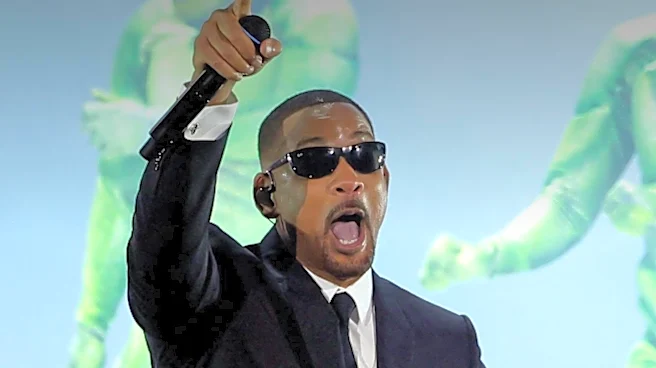
Recent commentary from Will Smith regarding The Notorious B.I.G.'s 1994 debut album, 'Ready to Die,' has resurfaced, sparking renewed discussion within the hip-hop community. Smith previously lauded the album not merely as entertainment, but as a profound
psychological examination of young Black men navigating poverty, paranoia, and systemic neglect in Brooklyn. He stated that the album should be taught in psychology classes for its accurate depiction of depression, despair, and survival instincts. Tracks like 'Everyday Struggle' and 'Suicidal Thoughts' were highlighted by Smith for their raw portrayal of the mental health toll of street life. This re-emergence of Smith's remarks has drawn attention to the contrast between his clean-cut musical image from the 1990s and the gritty realism found in Biggie's work, prompting varied reactions from fans and critics alike.
Why It's Important?
The renewed debate surrounding Will Smith's analysis of 'Ready to Die' underscores ongoing discussions about the academic and cultural validation of hip-hop as a serious art form. Smith's perspective, which frames the album as a psychological blueprint, was considered ahead of its time by some, validating hip-hop as literature and psychological truth long before universities began offering courses on rap icons. Conversely, critics argue that Smith's 'academic' framing risks clinicalizing real-world trauma, potentially reducing the lived experiences of street survival and existential dread to a mere textbook exercise. This tension highlights the differing ways in which art, particularly from marginalized communities, is interpreted and valued, and how celebrity endorsements can both elevate and complicate such narratives. The discussion also touches on the authenticity of commentary from artists with vastly different public personas and artistic styles.
What's Next?
The ongoing discussion is likely to continue within hip-hop forums, social media, and cultural commentary platforms, as fans and critics further dissect the implications of Smith's original statements. This could lead to more academic analyses of 'Ready to Die' and other seminal hip-hop albums, potentially influencing how these works are integrated into educational curricula. Furthermore, the debate may prompt other artists and cultural figures to offer their interpretations of classic hip-hop, fostering a broader conversation about the genre's artistic and sociological significance. The resurfacing of such commentary often encourages re-evaluation of historical works and their contemporary relevance, potentially introducing new generations to the depth and complexity of albums like 'Ready to Die.'
Beyond the Headlines
Beyond the immediate debate, this event touches on deeper implications regarding the intersection of art, mental health, and social commentary. Smith's emphasis on 'Ready to Die' as a psychological study brings to light the often-overlooked therapeutic and diagnostic potential of artistic expression, particularly in genres like hip-hop that emerge from challenging socio-economic environments. It also raises questions about who is deemed 'qualified' to interpret and validate such art, especially when there's a perceived disconnect between the commentator's lived experience and the subject matter. This discussion contributes to the broader cultural shift towards recognizing the profound impact of music on understanding societal issues and individual psychology, pushing for a more inclusive and nuanced appreciation of diverse artistic narratives.