



What's Happening?
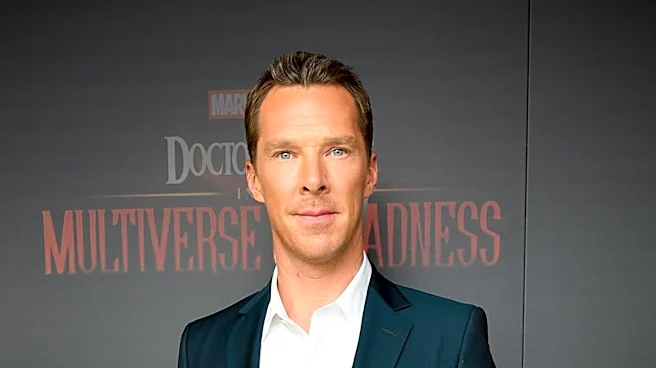
Diane Morgan's latest series, 'Cunk on Cinema,' a three-part history of film, features Benedict Cumberbatch among its interviewees. The mockumentary, which originated from Morgan's character Philomena Cunk on Charlie Brooker's 'Screenwipe' special, is known
for its absurd and often nonsensical questioning. In the series, Cunk, a stubbornly ill-informed documentarian, baffles experts with her unique perspective on film history. Benedict Cumberbatch's appearance includes an interview where his irritation at Cunk's pointless questions, such as whether all actors like chickpeas, appears to be part of the comedic act. The show's humor largely stems from the contrast between Cunk's idiocy and the serious subjects or interviewees. The series also features other figures like film critic Mark Kermode and filmmakers Michael Bay and Steven E de Souza, who react with varying degrees of exasperation or bewilderment to Cunk's tangents and misapprehensions.
Why It's Important?
The popularity of 'Cunk on Cinema' and its inclusion of prominent figures like Benedict Cumberbatch highlights a growing trend in U.S. and international entertainment: the mockumentary format as a vehicle for social commentary and comedic relief. This genre allows for a unique blend of satire and genuine engagement with cultural topics, often by juxtaposing absurdity with reality. For the U.S. audience, such shows offer a refreshing take on educational content, making complex subjects like film history accessible through humor. The participation of well-known actors like Cumberbatch not only boosts the show's visibility but also demonstrates a willingness among celebrities to engage in self-aware and unconventional comedic projects. This trend can influence future comedic programming, encouraging more experimental and intellectually playful approaches to television, and potentially broadening the appeal of mockumentaries to a wider demographic.
Beyond the Headlines
Beyond its comedic value, 'Cunk on Cinema' subtly explores the nature of expertise and public understanding in the digital age. Philomena Cunk's character, with her confident yet utterly misinformed pronouncements, serves as a satirical mirror to the spread of misinformation and the challenges of critical thinking. Her obsession with AI and attempts to use ChatGPT to validate incorrect beliefs highlight contemporary concerns about artificial intelligence's role in shaping narratives and the potential for technology to reinforce ignorance rather than enlighten. The show's ability to elicit genuine exasperation from some interviewees, even when they are aware of the comedic premise, speaks to the enduring power of persistent, illogical questioning. This mockumentary format, therefore, not only entertains but also prompts reflection on how information is consumed, processed, and often distorted in modern society, offering a commentary on intellectual humility and the pitfalls of uncritical acceptance.