









What's Happening?
In several U.S. states, the construction of data centers is leading to land seizures through eminent domain, causing controversy among homeowners and farmers. In Georgia, residents are being compelled to sell their properties for a Georgia Power transmission
project aimed at supporting data centers. Similar issues are arising in Virginia, Pennsylvania, Maryland, and Indiana, where utility companies are planning transmission lines to meet the growing demand for data center infrastructure. These projects often involve acquiring private land, sometimes against the owners' wishes, leading to disputes over fair compensation and the use of eminent domain.
Why It's Important?
The expansion of data centers is crucial for supporting the growing demand for digital services and artificial intelligence development. However, the use of eminent domain for such projects raises ethical and legal questions about property rights and compensation. The situation reflects broader tensions between technological advancement and individual rights, as well as the environmental and social impacts of large-scale infrastructure projects. The controversy also highlights the need for transparent and fair processes in land acquisition, balancing public interest with the rights of property owners.
What's Next?
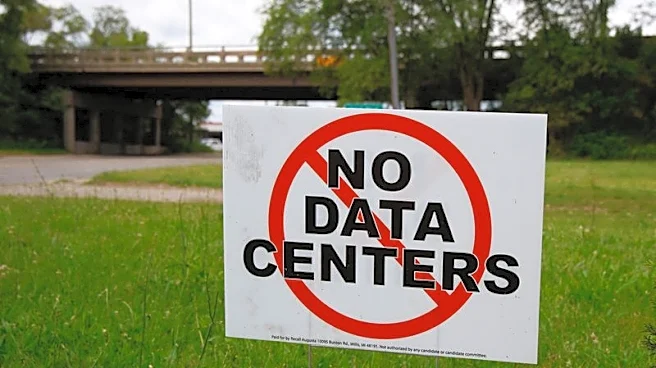
As data center construction continues, further legal and public disputes are likely. Stakeholders, including utility companies, government agencies, and affected communities, will need to engage in dialogue to address concerns and find equitable solutions. Potential reforms in eminent domain laws may be considered to ensure fair compensation and protect property rights. Additionally, public protests and advocacy efforts may influence future policy decisions and project planning.