





What's Happening?
Rayonier Advanced Materials (RYAM) has announced the temporary shutdown of its industrial complex in Témiscaming, Quebec, effective September 15, for an indefinite period. This decision is expected to impact approximately 400 unionized workers, as well
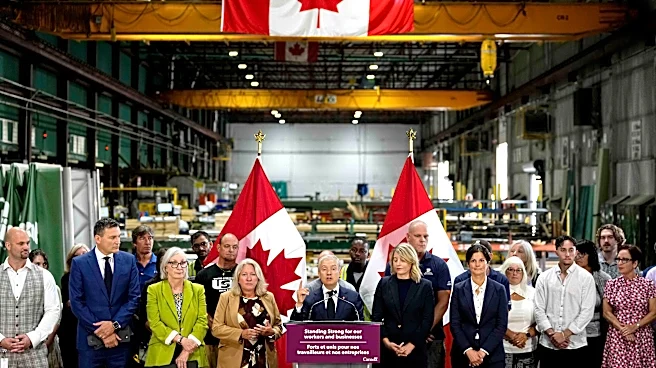
as managers, contractors, suppliers, and other businesses reliant on the facility. The mill produces coated paperboard and high-yield pulp for regional and international markets. RYAM cited the magnitude of U.S. tariffs, combined with long-standing challenges in the pulp and paper sector, as the primary reasons for the shutdown, stating that continued operations are no longer economically viable. Daniel Cloutier, Quebec director of the Unifor union, highlighted that workers are bearing the economic shock of a trade war they did not initiate. The Federation of Northern Ontario Municipalities (FONOM) expressed concern that a prolonged shutdown could lead to a loss of skilled labor and have lasting consequences for the forestry industry across the region, including northeastern Ontario, due to interconnected supply chains and specialized workers.
Why It's Important?
The temporary shutdown of Rayonier Advanced Materials' Témiscaming mill due to U.S. tariffs has significant implications for the U.S. market and the broader North American forestry sector. While the mill is in Quebec, its products, such as coated paperboard and high-yield pulp, are used in international markets, including the U.S. The disruption in supply could affect U.S. industries that rely on these materials for paper, packaging, and building products, potentially leading to increased costs or supply chain instabilities. Furthermore, the situation underscores the real-world impact of trade disputes and tariffs on cross-border industries. U.S. tariffs, intended to protect domestic industries, can inadvertently harm the broader economic ecosystem by disrupting established supply chains and affecting the availability and pricing of essential materials. This event highlights the complex interplay between trade policy, industrial operations, and regional economies, demonstrating how policy decisions can have far-reaching consequences beyond their immediate targets.
What's Next?
The immediate next steps involve the indefinite shutdown of the Témiscaming mill on September 15, affecting 400 unionized workers and numerous associated businesses. The Unifor union is advocating for stronger industrial policies and income security measures for the affected workers. The Federation of Northern Ontario Municipalities (FONOM) is urging the Canadian and Quebec governments to collaborate with RYAM, Unifor, and local partners to find solutions that could allow operations to resume. The focus will be on coordinating government programs to support affected workers and businesses, with the aim of preventing the temporary shutdown from becoming permanent. The long-term future of the mill and its workforce hinges on the resolution of the U.S. tariffs and the broader economic viability of the pulp and paper sector, which has faced challenges for several years. Stakeholders will be closely watching for any developments in trade negotiations or government interventions.
Beyond the Headlines
The shutdown of the RYAM mill in Témiscaming due to U.S. tariffs reveals deeper implications regarding the vulnerability of integrated North American supply chains to trade policy shifts. While the immediate impact is on Canadian workers and communities, the ripple effects can extend to U.S. industries that depend on these materials. This situation highlights the ethical dilemma of trade protectionism, where policies designed to benefit one nation's industries can inadvertently cause significant economic hardship in neighboring countries, affecting livelihoods and regional stability. The reliance on specialized skills in the forestry sector means that a prolonged shutdown could lead to a permanent loss of expertise, making it difficult to restart operations even if trade conditions improve. This event serves as a stark reminder of the interconnectedness of the North American economy and the need for careful consideration of the broader consequences of trade policies on cross-border industries and communities.