





What's Happening?
During the filming of the 2012 action thriller 'The Guest,' actor Denzel Washington reportedly made a specific demand regarding his fight scenes, as recounted by stunt coordinator Oliver Schneider. Schneider, who has worked with numerous Hollywood stars,
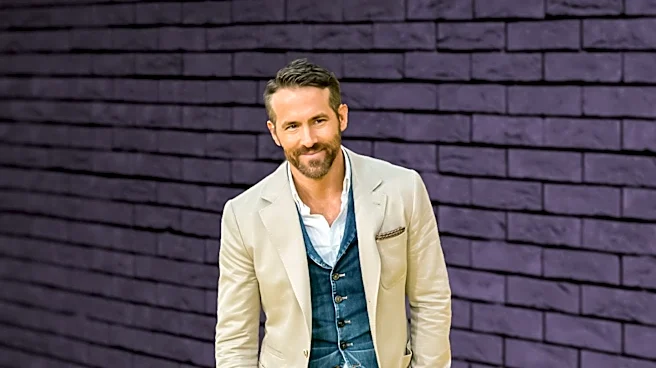
shared an anecdote about Washington's insistence on an equal number of hits during a choreographed fight sequence. After reviewing pre-visualizations of a fight where his character received six hits and delivered five, Washington stated, 'I am the star of the movie, he is not going to touch me again.' This led to a negotiation where Washington ultimately agreed to the scene on the condition that if his character was hit five times, he would also hit his opponent five times. The film, directed by Daniel Espinosa, stars Washington as Tobin Frost, a renegade CIA agent, and Ryan Reynolds as Matt Weston, a young CIA agent tasked with guarding a safe house in Cape Town.
Why It's Important?
This incident highlights the significant influence and creative control that established actors like Denzel Washington can exert on film productions, particularly in shaping their on-screen portrayal. While stunt coordinators meticulously design action sequences for safety and narrative flow, the star's input can alter these plans, reflecting a balance of power between artistic vision and performer demands. This dynamic can impact the authenticity of fight choreography, potentially prioritizing a star's image over realistic combat. For the film industry, such instances underscore the complex collaborative process and the need for effective communication between actors, directors, and stunt teams to achieve both creative goals and maintain production efficiency. It also offers a glimpse into the behind-the-scenes negotiations that shape the final product seen by audiences.
What's Next?
While this specific incident is historical, it serves as a case study for future film productions involving high-profile actors. The ongoing evolution of filmmaking techniques and the increasing emphasis on actor safety and creative input suggest that such negotiations will continue to be a part of the production process. Directors and stunt coordinators will likely continue to adapt their approaches to accommodate star demands while striving to maintain the integrity and excitement of action sequences. The anecdote also contributes to the broader understanding of Denzel Washington's professional persona and his commitment to his roles, even in the minutiae of action choreography. Future projects involving similar dynamics will likely see continued discussions around balancing star power with the practicalities of stunt work.
Beyond the Headlines
The story of Denzel Washington's demand goes beyond a simple on-set disagreement; it touches upon the broader themes of artistic control, star power, and the perception of masculinity in action cinema. Washington's insistence on an equal exchange of blows can be interpreted as a desire to maintain a strong, dominant image for his character, a common trope in action films where protagonists often appear invincible. This reflects cultural expectations placed on leading men in the genre. Furthermore, it raises questions about the collaborative nature of filmmaking and how individual egos or artistic visions can shape the final product. The incident also subtly highlights the often-unseen labor of stunt coordinators and their crucial role in translating a director's vision into safe and impactful action, sometimes navigating the strong personalities of the stars they work with.