





What's Happening?
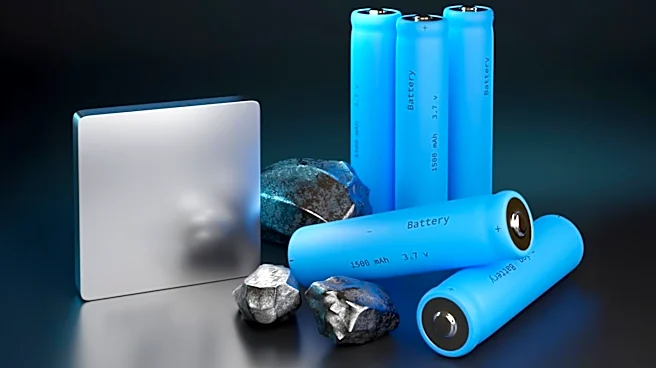
Battery manufacturers worldwide are increasingly investing in the development of solid-state batteries, a technology that promises to offer significant advantages over traditional lithium-ion batteries. Companies such as CATL, BYD, LG, and Samsung are at the forefront
of this research, with CATL alone employing over 1,000 researchers dedicated to this field as of 2024. Solid-state batteries replace the liquid electrolyte found in conventional lithium-ion batteries with a solid material, potentially making them lighter, safer, and more energy-dense. This shift could address some of the current limitations of lithium-ion batteries, such as the risk of fire due to flammable liquid electrolytes and the need for heavy material scaffolding. Despite the promise, the chairman of CATL has indicated that solid-state batteries are still in the early stages of technological readiness, with commercial viability yet to be established.
Why It's Important?
The development of solid-state batteries is crucial as it could revolutionize the energy storage industry by providing safer and more efficient alternatives to current battery technologies. This innovation is particularly significant for the electric vehicle (EV) market, where battery weight and safety are critical factors. Lighter and safer batteries could lead to longer driving ranges and reduced risk of battery fires, addressing two major concerns for consumers and manufacturers alike. Additionally, the potential for solid-state batteries to be more energy-dense could lead to cost reductions in the long term, making EVs more accessible to a broader audience. The shift towards solid-state technology also aligns with global efforts to reduce reliance on fossil fuels and decrease carbon emissions, contributing to environmental sustainability.
What's Next?
As research and development continue, the focus will likely be on overcoming the technical challenges that currently hinder the commercial viability of solid-state batteries. This includes improving the performance of solid electrolytes and ensuring that the batteries can be produced at scale. Battery manufacturers and startups are expected to increase their investments in this area, seeking breakthroughs that could lead to the first commercially viable solid-state batteries. The success of these efforts could prompt significant changes in the automotive industry and beyond, potentially influencing energy policies and market dynamics. Stakeholders, including governments and environmental groups, may also play a role in supporting the transition to this promising technology through incentives and regulatory frameworks.
Beyond the Headlines
The push for solid-state batteries highlights broader trends in the energy sector, including the increasing importance of innovation in addressing climate change and energy security. The development of safer and more efficient batteries could have far-reaching implications, not only for transportation but also for renewable energy storage and consumer electronics. As the technology matures, ethical considerations such as the sourcing of raw materials and the environmental impact of battery production will become increasingly important. Companies will need to balance technological advancements with sustainable practices to ensure that the benefits of solid-state batteries are realized without compromising environmental and social standards.