








What's Happening?
Researchers Sarah Roscoe, Lachlan Hovany, Kamila Maciocha, Witawas Srisa-an, and Jitender S. Deogun have introduced SAMS (Structured Graph Framework for Securing Additive Manufacturing Systems), a multi-layered graph framework designed to secure additive
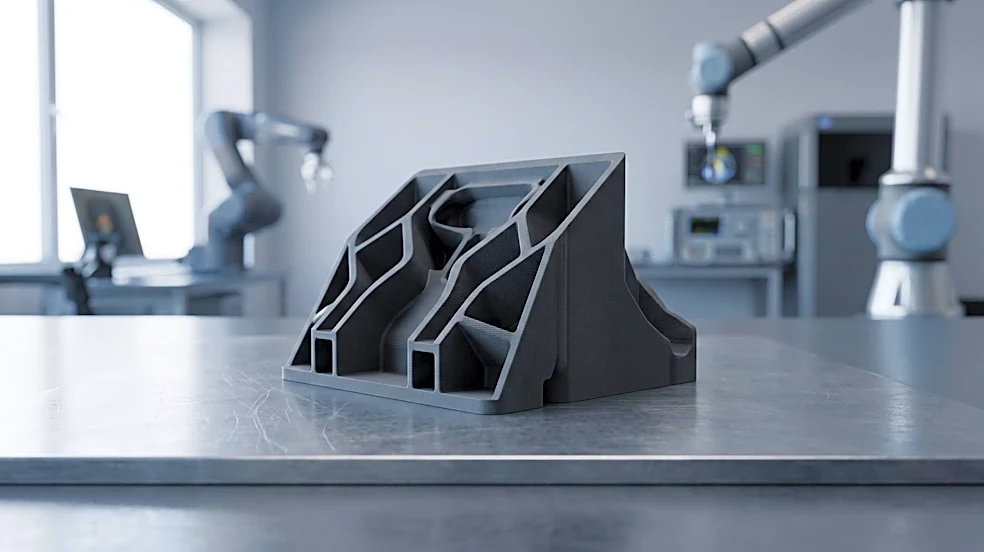
manufacturing systems by analyzing mesh files for geometry defects. The framework aims to address the critical issue of malicious tampering or accidental authoring mistakes in 3D printable mesh files, which can silently compromise the structural integrity of printed parts. SAMS models geometry across mesh, facet, and surface levels, providing a more comprehensive structural view than traditional single-pass mesh checks. This detailed representation is intended to reduce the complexity of downstream vulnerability analysis, which is crucial for validating numerous assets or catching issues early in a production pipeline. The paper includes formal graph-theoretic properties and an open-source Python 3.12 implementation, making it accessible for developers and technical artists to experiment with automated mesh inspection.
Why It's Important?
The SAMS framework is important because it directly addresses a significant security and reliability challenge in additive manufacturing, commonly known as 3D printing. As 3D printing becomes increasingly prevalent in critical sectors like aerospace, robotics, medicine, and construction, ensuring the integrity of printed components is paramount. A compromised mesh file, whether due to malicious intent or error, could lead to structural failures, safety hazards, and significant economic losses. SAMS offers a potential solution by automating the validation of mesh integrity, which is currently a labor-intensive and error-prone process. By providing a robust method for detecting defects before parts are printed, SAMS can enhance the trustworthiness of additive manufacturing processes, reduce waste, and improve the safety and performance of 3D-printed products. This has implications for U.S. industries relying on advanced manufacturing techniques, bolstering supply chain security and product quality.
What's Next?
The immediate next step for SAMS involves its adoption and testing within various additive manufacturing pipelines. Developers and technical artists are encouraged to experiment with the open-source Python implementation to integrate automated mesh inspection into their existing tooling. The research team will likely seek feedback from industry practitioners to refine the framework and assess its practical applicability and scalability. Further research may focus on enhancing the framework's ability to detect more sophisticated forms of tampering and integrating it with real-time monitoring systems during the printing process. The long-term goal is for SAMS, or similar graph-based security frameworks, to become a standard component in the quality assurance and security protocols for additive manufacturing, influencing how mesh validation is automated in content and fabrication pipelines across industries.
Beyond the Headlines
The SAMS framework highlights the evolving cybersecurity landscape in the physical world, where digital vulnerabilities can directly translate into tangible risks. The integrity of digital design files, once primarily a concern for intellectual property, now directly impacts the safety and functionality of physical objects. This raises ethical questions about accountability in the event of a failure caused by a digitally compromised design. Culturally, it underscores the increasing convergence of digital and physical realms, where the 'code' of a 3D model is as critical as the material it's printed from. The development of such frameworks also points to a future where advanced manufacturing processes are inherently intertwined with sophisticated digital security measures, necessitating a new generation of engineers and cybersecurity professionals skilled in both domains. This shift could lead to new industry standards and regulatory requirements for digital file integrity in manufacturing.