








What's Happening?
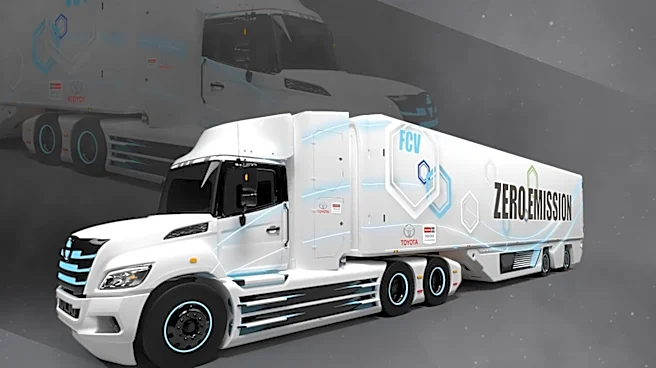
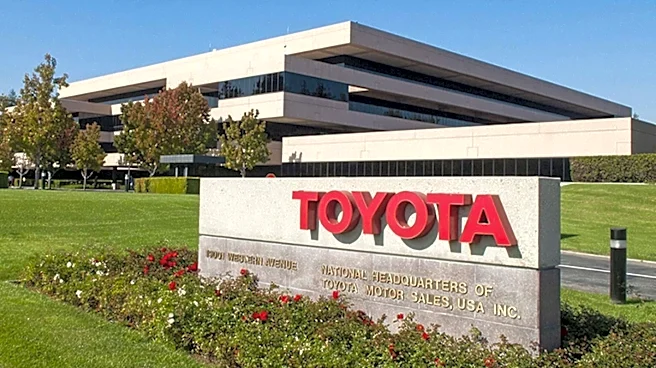
Toyota Motor North America's Hydrogen Headquarters (H2HQ) division is preparing to launch hydrogen-powered commercial trucks in the U.S. by 2027. The company has installed two mobile hydrogen fueling devices at its North American Parts Center California
(NAPCC), its largest U.S. parts distribution facility. These mobile fuelers will support Toyota’s commercial logistics fleets, enabling heavy-duty fuel cell trucks to haul freight from the Port of Los Angeles to Ontario and across the region. Toyota also plans to construct a permanent fueling station at the NAPCC site. This station will initially fuel heavy-duty trucks commissioned through Hyroad Energy and later integrate trucks equipped with Toyota’s certified fuel cell powertrain. In a public-private partnership, Toyota is collaborating with the U.S. Department of Energy’s National Laboratory of the Rockies (NLR) in Golden, Colorado, to research initiatives such as 70 MPa high-flow hydrogen fueling for heavy-duty trucks. Testing under SAE J2601-5 standards has demonstrated that these heavy-duty trucks can be refueled in approximately 8 minutes, providing a range of up to 450 miles. Unlike diesel powertrains, fuel cells emit only water. Toyota aims to upgrade its private fueling infrastructure at H2HQ to the same high-flow standard for testing heavy-duty vehicles and install new equipment for light passenger fuel cell electric vehicles to evaluate station hardware and improve operations and reliability.
Why It's Important?
This initiative marks a significant step in the decarbonization of the U.S. commercial transportation sector. The introduction of hydrogen-powered heavy-duty trucks by a major manufacturer like Toyota could accelerate the adoption of fuel cell technology in logistics and freight operations, offering a cleaner alternative to traditional diesel engines. The rapid refueling times, comparable to diesel trucks, address a key concern for commercial fleet operators regarding operational efficiency. The collaboration with the U.S. Department of Energy’s National Laboratory of the Rockies underscores a commitment to advancing hydrogen fueling infrastructure and technology, which is crucial for widespread adoption. This move by Toyota contrasts with decisions by other major automakers like General Motors and Stellantis, which have discontinued their hydrogen fuel cell development programs due to infrastructure limitations and high capital requirements. Toyota's continued investment and planned deployment could establish a competitive advantage in the emerging hydrogen mobility market, potentially influencing future regulatory frameworks and investment in hydrogen infrastructure across the U.S. The success of these commercial trucks could also pave the way for broader applications of fuel cell technology in other heavy-duty sectors and contribute to national emissions reduction goals.
What's Next?
Over the coming months, Toyota plans to upgrade its private fueling infrastructure at its H2HQ to the high-flow standard for heavy-duty vehicle testing. It will also install new equipment for light passenger fuel cell electric vehicles to evaluate station hardware and gather insights for improving operations and reliability. Once the publicly available permanent station at NAPCC is operational, it will offer both conventional and high-flow hydrogen fueling for heavy-duty trucks, alongside a separate area for light-duty vehicles. The initial deployment will involve trucks commissioned through Hyroad Energy, with Toyota's own certified fuel cell powertrains being integrated later. The ongoing research with the U.S. Department of Energy’s National Laboratory of the Rockies will continue to refine high-flow hydrogen fueling technologies. The success of these pilot programs and the expansion of fueling infrastructure will be critical in determining the pace of hydrogen fuel cell adoption in the U.S. commercial sector. Future developments will likely include further advancements in fuel cell durability, cost reduction, and the expansion of hydrogen production and distribution networks to support a growing fleet of hydrogen-powered vehicles.
Beyond the Headlines
Toyota's commitment to hydrogen fuel cell technology for commercial vehicles highlights a strategic divergence within the automotive industry regarding future propulsion systems. While some manufacturers prioritize battery-electric vehicles, Toyota is investing heavily in hydrogen, particularly for heavy-duty applications where range, payload, and rapid refueling are critical. This approach could foster a dual-pathway strategy for decarbonization in transportation, with battery-electric solutions for shorter-range and lighter-duty applications, and hydrogen fuel cells for long-haul and heavy-duty segments. The development of robust hydrogen fueling infrastructure, as demonstrated by Toyota's plans, is not merely a logistical challenge but also a significant economic and environmental undertaking. It requires substantial investment in hydrogen production, storage, and distribution, which could stimulate new industries and job creation. Furthermore, the public-private partnerships involved in this initiative reflect a broader recognition of the need for collaborative efforts to achieve energy transition goals. The long-term success of hydrogen as a viable energy source for transportation will depend on overcoming challenges related to cost-effectiveness, scalability of green hydrogen production, and the establishment of a comprehensive and accessible fueling network across the nation.