






What's Happening?
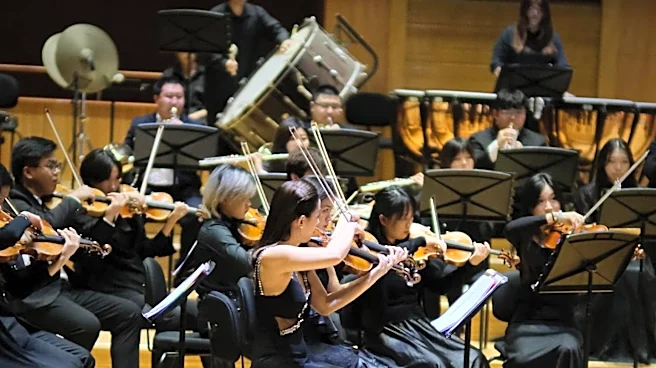
The article discusses the historical significance of orchestral celebrations during the United States' centennial and bicentennial anniversaries, highlighting the role of orchestras in commemorating these events. In 1876, conductor Theodore Thomas led
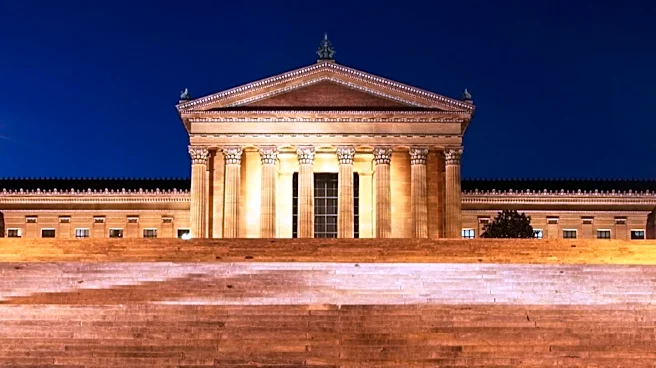
a 150-member orchestra in the premiere of Richard Wagner's 'Grosse Festmarsch' during the Centennial Exposition in Philadelphia, attended by President Ulysses S. Grant and other dignitaries. The bicentennial in 1976 saw a surge in federal and state funding for music commissions, with the National Endowment for the Arts (NEA) supporting numerous orchestral projects. Despite the ambitious nature of these celebrations, many commissioned works have not endured in the repertoire. As the U.S. approaches its 250th anniversary, there is a noticeable lack of similar enthusiasm and funding for orchestral projects, although some initiatives like the NEA's 'America250' project are underway.
Why It's Important?
The orchestral celebrations of the past centennial and bicentennial anniversaries reflect the cultural and political climate of their times. The 1976 bicentennial, in particular, was marked by a spirit of optimism and innovation, with composers exploring new musical technologies and themes. This period of artistic investment highlighted the role of music in fostering national identity and cultural expression. However, the current lack of comparable enthusiasm and funding for the upcoming 250th anniversary suggests a shift in priorities and possibly a diminished role for orchestras in national celebrations. This change could impact the cultural landscape and the future of orchestral music in the U.S., as well as the opportunities for composers to engage with national themes.
What's Next?
As the U.S. approaches its 250th anniversary, orchestras and cultural institutions may need to adapt to changing funding landscapes and public interest. The NEA's 'America250' project, although smaller in scale compared to past initiatives, represents an opportunity for orchestras to engage with contemporary themes and audiences. Future performances and commissions may focus on diverse and inclusive narratives, reflecting the evolving cultural and social dynamics of the country. The response from major orchestras and cultural leaders will be crucial in determining the role of music in the upcoming celebrations and in shaping the future of American orchestral music.
Beyond the Headlines
The shift in focus from large-scale national celebrations to more individualized and diverse expressions of American identity reflects broader societal changes. The emphasis on personal and cultural narratives in music commissions may lead to a richer and more varied cultural landscape, but it also raises questions about the role of national identity in the arts. The evolution of orchestral music in the U.S. may mirror broader trends in society, including the increasing importance of social media and individual expression. This could lead to new forms of artistic collaboration and innovation, but also challenges in maintaining a cohesive national cultural identity.