
What's Happening?
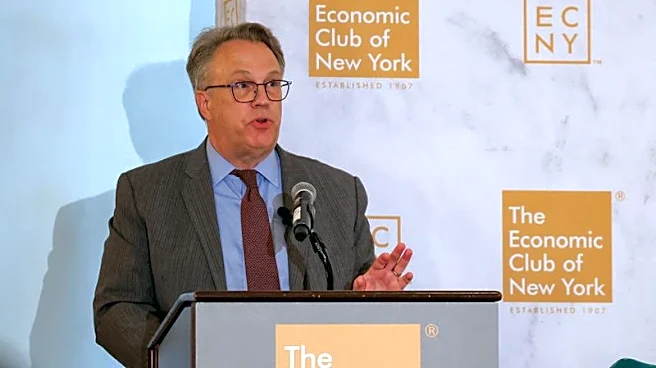
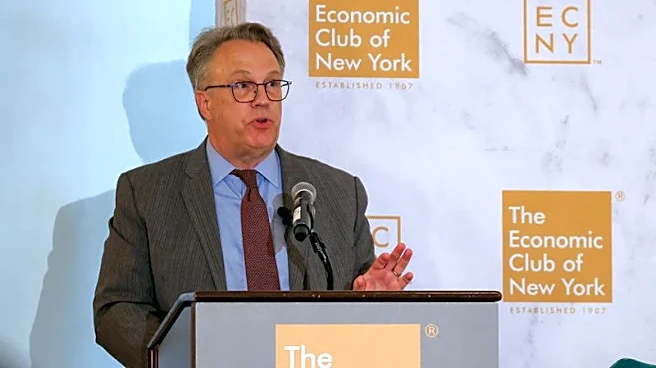
New York Federal Reserve President John Williams stated on Monday that policymakers still need to take action to bring inflation under control. He indicated that further interest rate increases are likely
to occur "over time" as the U.S. economy continues to grow. Williams expressed confidence that inflation will approach the Federal Reserve's 2% target by 2027 and reach it the following year. While acknowledging that artificial intelligence is exerting some pressure on prices, he found "little evidence" that it would lead to more persistent inflation. Williams emphasized that monetary policy must ensure that economic shocks do not result in broader inflationary dynamics or erode stable inflation expectations. His remarks, delivered at the University of Mount Saint Vincent in New York, underscored the necessity of timely and sustained actions to achieve the 2% inflation goal, despite the economy's continued strength and inflation remaining above target.
Why It's Important?
John Williams' statements are significant for U.S. industries, financial markets, and consumers as they signal the Federal Reserve's ongoing commitment to tightening monetary policy. His indication of future interest rate hikes suggests that borrowing costs for businesses and individuals are likely to continue rising, potentially impacting investment, consumer spending, and economic growth. For industries reliant on credit, such as housing and manufacturing, higher rates could lead to reduced demand and slower expansion. Financial markets will closely monitor these signals for clues about the pace and magnitude of future rate adjustments, which can influence stock valuations and bond yields. The Fed's determination to bring inflation down to 2% is crucial for maintaining price stability and preserving the purchasing power of the dollar, directly affecting the financial well-being of American households. However, a prolonged period of higher rates also carries the risk of slowing economic activity more than intended, potentially leading to job losses or a recession.
What's Next?
The Federal Open Market Committee (FOMC) is scheduled to meet on December 8-9, with markets already anticipating a quarter-percentage-point interest rate increase from the current target range of 3.75%-4%. Williams' remarks are expected to be the final major policy statement from a Fed official before this crucial December decision. The FOMC will consider the "accumulation of more information" to determine the future path of monetary policy, as stated after their late October meeting. The ongoing strength of the economy and persistently high inflation will be key factors influencing their decision. Future actions will depend on incoming economic data, including inflation reports, employment figures, and GDP growth. The Federal Reserve's communication will continue to be closely scrutinized by investors, businesses, and consumers for further guidance on the trajectory of interest rates and the broader economic outlook.
Beyond the Headlines
The Federal Reserve's approach to combating inflation, as articulated by John Williams, highlights a delicate balancing act between controlling rising prices and sustaining economic growth. The long-term implications extend beyond immediate interest rate adjustments, touching upon the credibility of the central bank and the stability of the U.S. financial system. The emphasis on preventing "broader or persistent inflationary dynamics" underscores concerns about inflation expectations becoming entrenched, which could make it harder to bring prices down in the future. The debate among Fed officials regarding the pace of rate hikes reflects differing views on the economy's resilience and the potential for a 'soft landing' versus a more significant downturn. This ongoing policy challenge will shape the economic landscape for years, influencing everything from investment decisions and corporate strategies to household budgets and long-term financial planning, as the nation navigates a period of elevated inflation and evolving monetary policy.