







What's Happening?
A new study conducted by Loma Linda University School of Public Health, published in the Journal of the Academy of Nutrition and Dietetics, indicates that regularly incorporating walnuts into one's diet can lead to a shift towards a lower inflammatory
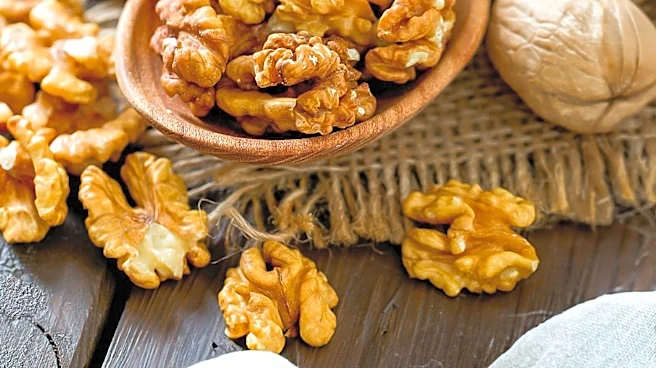
potential in overall dietary patterns. The research utilized the Dietary Inflammatory Index (DII), a tool designed to assess the inflammatory characteristics of a diet based on consumed foods and nutrients. The study, titled 'The Dietary Inflammatory Index is Lower Among Healthy Older Adults Consuming a Walnut-Supplemented Diet. Ancillary Results from the Walnuts and Healthy Aging Randomized Controlled Trial,' found that older adults who consumed 1-2 ounces (30-60 grams) of walnuts daily exhibited slightly, yet statistically significant, lower DII scores compared to a control group. This finding builds upon previous results from the Walnuts and Healthy Aging Study, which had already shown a correlation between daily walnut consumption and reductions in various circulating markers of inflammation. The study followed 319 older adults from Loma Linda, California, for two years, with one group consuming walnuts daily and the control group abstaining from walnuts and limiting other nuts, without other dietary changes.
Why It's Important?
This research is significant for public health and nutrition, particularly for the aging U.S. population. Chronic inflammation is a known contributor to numerous health issues, including arthritis, diabetes, heart disease, and autoimmune disorders. By demonstrating that a simple dietary addition like walnuts can lower the inflammatory potential of an overall diet, the study offers a practical and accessible strategy for improving long-term health. The findings suggest that dietary interventions don't necessarily require drastic overhauls but can involve incorporating nutrient-rich foods. This could influence dietary guidelines and recommendations for older adults, potentially reducing the burden of chronic inflammatory diseases. For the food industry, it highlights the value of promoting whole, unprocessed foods like walnuts as part of a healthy diet, potentially increasing demand for such products. Consumers stand to gain from a clearer understanding of how everyday food choices can impact their inflammatory status and overall well-being.
What's Next?
The findings from this study are expected to contribute to ongoing discussions about dietary recommendations for healthy aging and inflammation management. Future research may delve deeper into the specific mechanisms through which walnuts exert their anti-inflammatory effects and explore optimal dosages or combinations with other foods. Nutritionists and dietitians may begin to more explicitly recommend walnuts as part of anti-inflammatory dietary plans. The California Walnut Commission, which supported the study, may leverage these results in public awareness campaigns to promote walnut consumption. Additionally, the study's methodology, using the DII, could encourage further research into how various foods and dietary patterns influence inflammatory markers, potentially leading to more refined dietary advice for different populations and health conditions. The emphasis on consistent, simple food choices suggests a shift towards more sustainable and less restrictive dietary interventions.
Beyond the Headlines
Beyond the immediate health implications, this study underscores a broader trend in nutritional science: the focus on dietary patterns and the cumulative effect of food choices rather than isolated 'superfoods.' While walnuts are highlighted, the underlying message is about integrating nutrient-dense whole foods into a balanced diet. This approach challenges the 'miracle food' mentality and promotes a more holistic understanding of nutrition. Ethically, it reinforces the importance of evidence-based dietary advice, moving away from fads towards scientifically supported interventions. Culturally, it could encourage a return to traditional diets rich in whole foods, nuts, and seeds, which are often associated with better health outcomes. The study also subtly highlights the role of industry funding (California Walnut Commission) in supporting nutritional research, raising questions about potential biases while also acknowledging the practical necessity of such support for large-scale studies.