




What's Happening?
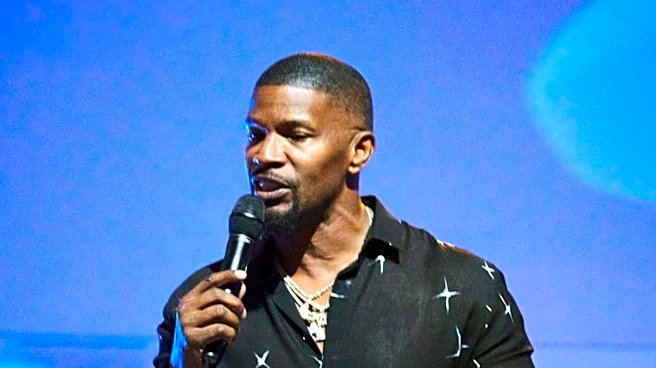
Jamie Foxx has voiced his reluctance to participate in an interview on Shannon Sharpe's 'Club Shay Shay' podcast. Foxx indicated that the current media environment incentivizes and rewards extreme or controversial statements, which he believes are necessary
to gain algorithmic traction. He shared these thoughts while promoting his new comedy special, 'Take Care of Yourself,' set to premiere on Hulu and Disney+. Foxx also discussed how evolving audience sensitivities have influenced his comedic material, leading him to omit certain jokes from his special. He specifically referenced a joke about George Floyd by Tony Hinchcliffe, stating he never liked it and that public reaction to such content prompts comedians to reconsider their material. Additionally, Foxx mentioned cutting a joke about aging and observing hip-hop icons grow older, citing examples like Deion Sanders in a commercial for adult diapers and Halle Berry discussing menopause, as reflections of this theme.
Why It's Important?
Foxx's comments highlight a significant tension within the entertainment industry, particularly for comedians, regarding creative freedom versus public perception and algorithmic demands. His hesitation to appear on a popular platform like 'Club Shay Shay' underscores a broader concern that authenticity and nuanced discussion are being overshadowed by the pursuit of viral moments. This trend can lead to self-censorship among artists who fear backlash or misinterpretation in a hyper-sensitive media landscape. For audiences, it raises questions about the quality and depth of content being produced when creators feel pressured to deliver 'crazy' remarks for engagement. The discussion also touches on the evolving nature of comedy itself, as comedians like Foxx adapt their material in response to changing societal norms and audience expectations, potentially impacting the future direction of stand-up and interview formats.
What's Next?
The conversation initiated by Jamie Foxx could prompt further dialogue among entertainers and media personalities about the pressures of viral culture and its impact on content creation. Other celebrities might echo similar sentiments, leading to a broader re-evaluation of interview formats and the types of discussions that are prioritized. Platforms like 'Club Shay Shay' may face increased scrutiny regarding the content they feature and the extent to which they contribute to the 'outrage' economy. Comedians might continue to navigate the delicate balance between pushing boundaries and avoiding controversy, potentially leading to more introspective or carefully curated performances. This could also influence how comedy specials are produced and marketed, with a greater emphasis on the artist's intent and the context of their jokes to mitigate potential misunderstandings.
Beyond the Headlines
Beyond the immediate concerns of media appearances, Foxx's remarks touch upon deeper ethical and cultural implications. The 'reward for outrageous comments' suggests a systemic issue where shock value often trumps thoughtful discourse, potentially eroding public trust in media and fostering a more polarized environment. This dynamic can stifle genuine artistic expression, as creators may feel compelled to conform to sensationalist trends rather than explore complex themes. The evolving sensitivity of audiences also raises questions about the role of comedy in society—whether it should challenge norms, provide escapism, or strictly adhere to prevailing social standards. This ongoing negotiation between artistic freedom, audience reception, and media algorithms reflects a significant cultural shift in how information and entertainment are consumed and produced, with long-term implications for creative industries and public discourse.