






What's Happening?
Physical therapists and fitness experts are highlighting the importance of maintaining a strong and flexible psoas muscle to alleviate pain and enhance overall mobility. The psoas, a ribbon-shaped muscle extending from the lower spine to the thigh bone,
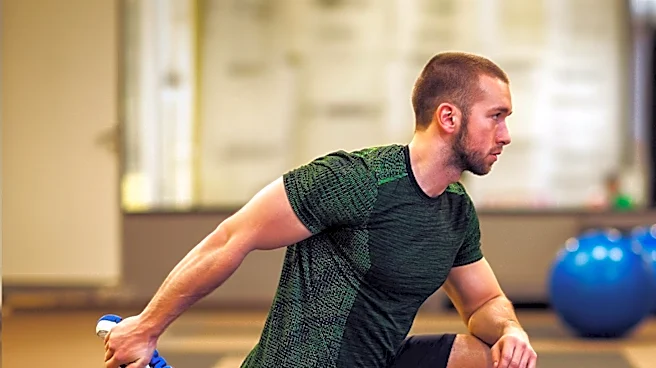
is crucial for hip flexion, spinal stabilization, and daily movements like walking and sitting. According to Melissa Prestipino, P.T., D.P.T., licensed physical therapist, and Jim White, R.D.N., A.C.S.M., owner of Jim White Fitness and Nutrition Studios, issues like overuse, poor posture, prolonged sitting, and conditions such as osteoarthritis can lead to psoas pain and stiffness. They recommend a routine of full-body stretches and exercises to strengthen and loosen this muscle. Specific exercises include the kneeling psoas stretch, supine psoas stretch, standing psoas stretch, leg raises, bridge pose, quadriceps stretch, lunge stretch, and camel pose. These exercises aim to lengthen and relax the psoas, strengthen surrounding muscles, and improve hip flexibility.
Why It's Important?
The emphasis on psoas health is significant for a broad demographic, particularly those experiencing lower back, hip, glute, or groin pain, which can often be attributed to a tight or weak psoas muscle. As individuals age, muscles and joints naturally decline, making targeted mobility work even more critical. Addressing psoas issues through recommended stretches and exercises can lead to improved posture, better movement mechanics, and enhanced functional mobility, thereby reducing discomfort and preventing further musculoskeletal problems. For individuals with sedentary lifestyles, such as those who sit for extended periods, these exercises offer a practical at-home solution to counteract the negative effects of prolonged inactivity. The expert recommendations provide accessible strategies for the general public to proactively manage their physical well-being and mitigate common age-related or lifestyle-induced pains.
What's Next?
Individuals experiencing pain in their lower back, hips, glutes, or groin are encouraged to incorporate the recommended psoas stretches and exercises into their regular fitness routines. Experts suggest performing these full-body routines at least once a week to see benefits. Continued practice of these exercises is expected to lead to sustained improvements in flexibility, strength, and overall comfort. Fitness professionals and physical therapists may further integrate these specific psoas-focused movements into broader wellness programs, potentially leading to more widespread adoption. The availability of expert-backed, at-home solutions empowers individuals to take a more active role in managing their musculoskeletal health, potentially reducing the need for more intensive interventions down the line.
Beyond the Headlines
The focus on the psoas muscle highlights a broader understanding of interconnectedness within the human musculoskeletal system. Often, pain in one area, such as the lower back, can originate from tightness or weakness in a seemingly distant muscle like the psoas. This perspective encourages a holistic approach to physical health, moving beyond symptomatic treatment to address root causes. The accessibility of these exercises also underscores a growing trend towards self-care and preventative health measures, where individuals are empowered with knowledge and tools to manage their physical well-being outside of clinical settings. This shift could lead to a more proactive public health landscape, emphasizing daily maintenance and functional movement to combat the effects of modern sedentary lifestyles and aging.