








What's Happening?
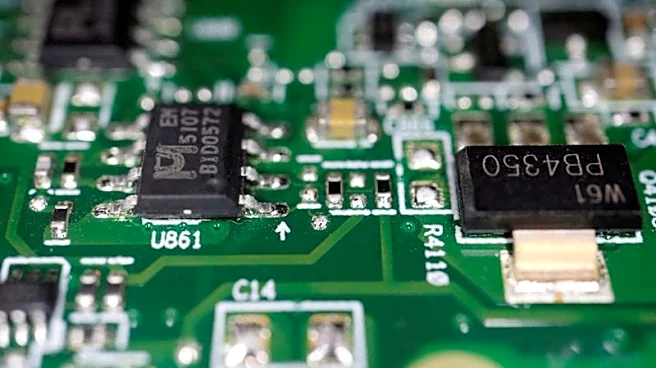
The U.S. Department of Commerce has announced an amendment to GlobalFoundries' existing CHIPS and Science Act award, reallocating up to $955 million to prioritize investments in silicon photonics, silicon-germanium, and advanced packaging technologies.
This reallocation aims to accelerate the company's capital investment to $5 billion at its facilities in Malta, New York, and Burlington, Vermont. These technologies are deemed critical for artificial intelligence, high-performance computing, and advanced communications infrastructure. The federal government is not increasing the total value of the CHIPS award but is strategically redirecting funds to enhance specific manufacturing capabilities. This development coincides with a separate U.S.-Japan semiconductor initiative that could finance two additional fabrication plants in New York, representing up to $21 billion in investment, with GlobalFoundries selected as the technology provider and operator for these proposed facilities. The first of these new fabs is expected to begin operations in 2029.
Why It's Important?
This strategic reallocation of CHIPS Act funds underscores a significant shift in the U.S. approach to semiconductor manufacturing, moving beyond conventional scaling to focus on advanced technologies crucial for future computing demands. Silicon photonics, silicon-germanium, and advanced packaging are vital for addressing the energy and bandwidth requirements of AI infrastructure, high-frequency electronic applications, and the integration of complex semiconductor components. By bolstering domestic manufacturing capacity in these areas, the U.S. aims to strengthen its semiconductor ecosystem, reduce reliance on foreign supply chains, and enhance national and economic security. The investment also signifies a commitment to creating high-skilled manufacturing jobs and fostering innovation within the U.S., particularly in New York's Capital Region. The involvement of a U.S.-Japan initiative further highlights international collaboration in securing critical technology supply chains.
What's Next?
GlobalFoundries is expected to break ground on the first of two new fabrication plants at its Malta, New York, site later this year, with operations anticipated to commence in 2029. The second facility's construction is contingent on additional investment. The company will continue to expand its investments in silicon photonics, silicon-germanium, and advanced packaging at its existing facilities in New York and Vermont. The U.S. Department of Commerce will also receive approximately four percent equity in GlobalFoundries as part of a separate agreement, allowing the American public to share in the company's growth. These initiatives will require ongoing research and development to overcome scientific and engineering challenges related to materials science, manufacturing processes, and chip architectures. The success of these investments will depend on effective construction, process development, and production ramp-up, alongside continued efforts in workforce development.
Beyond the Headlines
The emphasis on silicon photonics, silicon-germanium, and advanced packaging reflects a deeper understanding of the evolving landscape of semiconductor technology. As traditional transistor scaling faces physical limitations, these advanced approaches offer new pathways to enhance computing performance, energy efficiency, and data transfer capabilities. This strategic pivot has implications for various federal research disciplines, including materials science, microelectronics, photonics, nanotechnology, and advanced manufacturing. The need for precise control over materials, contamination, and manufacturing conditions at the nanoscale highlights the critical role of measurement science and standardized practices. The long-term success of these domestic manufacturing efforts will not only depend on financial investment but also on sustained innovation, a robust research infrastructure, and a skilled workforce capable of addressing complex scientific and engineering challenges.