
What's Happening?
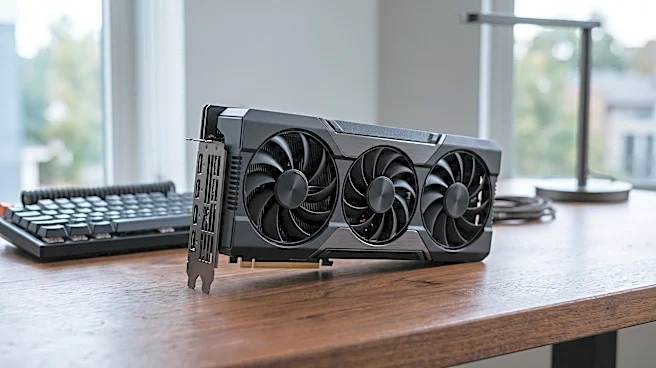
Nvidia's flagship GeForce RTX 5090 graphics cards have returned to stock at Newegg in the United States, offering first-party listings from manufacturers like Asus, Gigabyte, and MSI. This marks a significant
improvement in availability compared to September, when first-party retailer inventory was scarce. However, the renewed stock comes with exceptionally high prices, with the least expensive model, the Asus ROG Astral RTX 5090 OC, listed at $6,249.99. This price is approximately 3.13 times Nvidia's official Manufacturer's Suggested Retail Price (MSRP) of $1,999. Other models, such as the Gigabyte Aorus RTX 5090 Xtreme Waterforce and MSI Suprim SOC, are priced even higher, reaching up to $7,349.99.
Why It's Important?
The return of RTX 5090 stock to major retailers like Newegg is a positive development for consumers who have been struggling to acquire these high-demand graphics cards. However, the exorbitant pricing, significantly above MSRP, continues to make them inaccessible for most buyers. This situation reflects ongoing supply constraints and high demand, potentially fueled by both gaming enthusiasts and the increasing use of these powerful GPUs for AI and professional applications. The inflated prices impact the affordability of high-end PC gaming and content creation, potentially pushing consumers towards alternative, less powerful, or older-generation hardware. It also highlights the challenges in the semiconductor supply chain and the market's willingness to pay a premium for top-tier components.
What's Next?
While availability has improved, there is little indication that RTX 5090 prices will return to MSRP levels in the near future. Nvidia has confirmed that the RTX 5090 will continue shipping, despite rumors of discontinuation, but acknowledged ongoing supply constraints. The market will likely continue to see high prices as long as demand outstrips supply, especially with the growing influence of AI applications on GPU allocation. Consumers interested in the RTX 5090 will need to weigh the improved availability against the significantly higher cost. It remains to be seen if price adjustments in other markets, such as Japan, will eventually influence pricing trends in the U.S., but currently, there's no direct correlation.
Beyond the Headlines
The persistent high pricing of the RTX 5090, despite improved stock, points to a broader market dynamic where high-performance computing components are increasingly valued beyond their traditional consumer gaming market. The demand from AI and professional sectors is likely diverting a significant portion of the supply, contributing to the inflated prices seen by general consumers. This trend could lead to a bifurcation of the GPU market, with consumer-grade cards becoming more distinct from professional/AI-focused hardware in terms of pricing and availability. It also raises questions about the effectiveness of MSRPs in a market driven by extreme demand and limited supply, suggesting that official pricing may become less relevant for highly sought-after components.