
What's Happening?
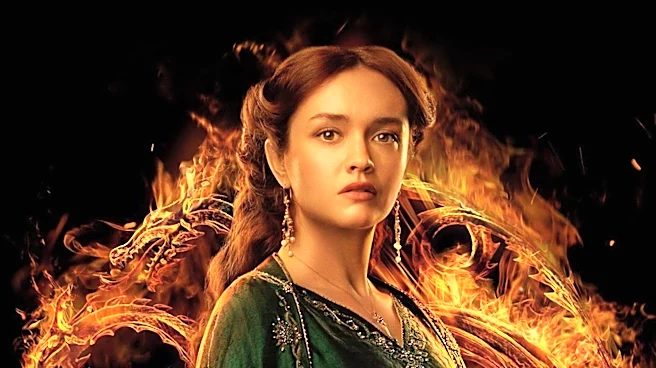
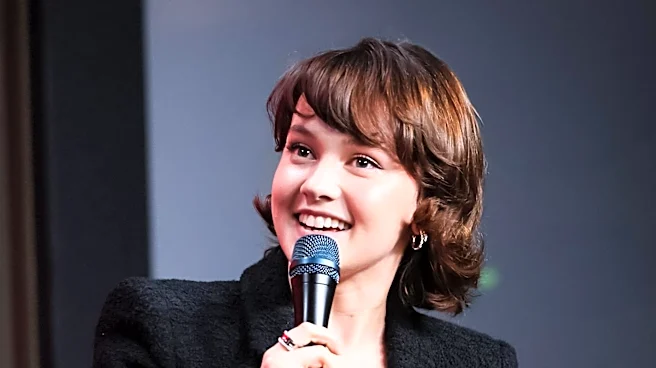
Olivia Cooke, who portrays Alicent Hightower in the series 'House of the Dragon,' has revealed that she has not memorized the names of all the dragons featured in the show, despite being three seasons
into her role. During a promotional interview for her new film, 'A Talent for Murder,' Cooke joked about having 'dragon blindness,' stating that many of the dragons look similar to her. She also admitted to not knowing the names of Rhaenyra's children, noting the prevalence of the name Aegon. Cooke expressed a desire to become more educated on the show's lore, a sentiment that has sparked debate among fans. While some critics expressed disappointment, many fans defended Cooke, highlighting that her character, Alicent Hightower, is not a dragonrider and rarely interacts with the dragons, making extensive knowledge of their names less relevant to her role.
Why It's Important?
This revelation from a prominent cast member of a major television series highlights the distinction between an actor's professional responsibilities and a fan's encyclopedic knowledge of a fictional universe. For the entertainment industry, it underscores how actors approach their roles, often focusing on character development and script-specific details rather than comprehensive lore. The fan reaction, ranging from criticism to defense, illustrates the passionate engagement of audiences with popular franchises and the high expectations some fans place on those involved in their creation. This dynamic can influence public relations strategies for shows, as cast members' comments can generate significant discussion and shape audience perception, even on seemingly minor details. It also touches on the broader discussion of what constitutes 'authenticity' or 'dedication' from actors in beloved fictional worlds.
What's Next?
The discussion surrounding Olivia Cooke's comments is likely to continue within fan communities and entertainment news outlets. While unlikely to impact the production or storyline of 'House of the Dragon,' it may lead to further conversations about actors' engagement with source material and fan expectations. Cooke herself has indicated a willingness to learn more about the show's lore, which could potentially be addressed in future interviews or promotional content. The incident also serves as a reminder for publicists and actors to anticipate fan reactions to comments about popular franchises, especially those with intricate backstories and dedicated fanbases. Future promotional tours for 'House of the Dragon' may see cast members more prepared to discuss specific lore details.
Beyond the Headlines
The debate sparked by Olivia Cooke's comments delves into the evolving relationship between creators, performers, and audiences in the age of highly detailed fictional universes. It raises questions about the 'ownership' of a story – whether it belongs solely to its creators, or if fans, through their deep engagement, also lay claim to its intricacies. This situation also subtly highlights the pressure on actors in major franchises to embody not just their characters, but also to some extent, the fandom's collective knowledge and passion. The defense of Cooke by many fans suggests a growing understanding that an actor's primary role is performance, not necessarily encyclopedic knowledge of every detail, especially when those details are not central to their character's arc. This could contribute to a more nuanced public discourse around celebrity engagement with fan culture.