



What's Happening?
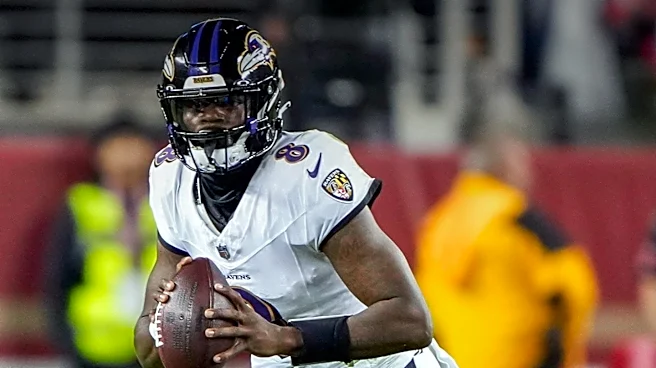
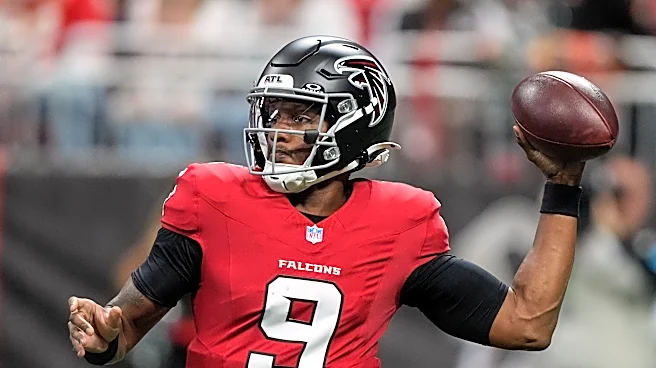
The Atlanta Falcons are experiencing significant instability at the quarterback position, leading to increased speculation about their potential pursuit of Baltimore Ravens quarterback Lamar Jackson. According to Sports Illustrated's Samuel Profeta, prediction
markets show a sharp rise in the likelihood of Jackson joining the Falcons by May 1, 2027, with Kalshi contracts for Atlanta rising to approximately 40%. This comes after the Falcons' recent struggles, including signing Kirk Cousins to a four-year, $180 million deal in 2024, drafting Michael Penix Jr. with the No. 8 overall pick, and later benching and releasing Cousins. Penix Jr. suffered a season-ending torn ACL in 2025 but returned to start this season, though his performance has declined during the team's current three-game skid. Jackson's current contract with the Ravens runs through 2027, with a projected 2027 cap charge of about $84.5 million, and he possesses a no-trade clause, giving him control over any potential deal. Jackson is also recovering from a broken and dislocated thumb, which could require six to ten weeks of recovery, in addition to an ankle injury that caused him to miss three games.
Why It's Important?
The ongoing quarterback instability for the Atlanta Falcons highlights a critical challenge for NFL franchises: securing a long-term, high-performing signal-caller. The Falcons' significant investments in Cousins and Penix Jr., followed by their struggles, underscore the high-stakes nature of quarterback decisions in professional football. The rising speculation around Lamar Jackson, a two-time NFL MVP, indicates the market's perception of his value and the Falcons' desperate need for a franchise quarterback. If the Falcons were to acquire Jackson, it would dramatically alter their competitive outlook, potentially making them a contender given their existing offensive talent like Drake London, Bijan Robinson, and Kyle Pitts. However, Jackson's substantial contract and no-trade clause present significant financial and logistical hurdles for any team attempting to acquire him, including the Falcons, who would need to navigate his projected $84.5 million cap charge in 2027. This situation also reflects the broader trend in the NFL where elite quarterback talent commands immense financial and contractual power, influencing team building and strategic decisions for years.
What's Next?
The immediate focus for Lamar Jackson is his recovery from a broken and dislocated thumb, which Ravens coach Jesse Minter estimates could take six to ten weeks. The Baltimore Ravens are reportedly continuing to push for a contract extension with Jackson, indicating their desire to retain him despite his current contract running through 2027. For the Atlanta Falcons, their current quarterback situation with Michael Penix Jr. will continue to be evaluated, especially given his recent performance decline. While there have been no reported trade talks between Atlanta and Baltimore, the rising speculation in prediction markets suggests that the Falcons could be a strong contender for Jackson if he becomes available in the future, particularly as his contract nears its end. The Falcons possess significant projected cap space in 2027, estimated at around $107.3 million, and additional draft capital, which could be leveraged in a potential pursuit of a veteran quarterback like Jackson. The situation will likely evolve as Jackson's contract status with the Ravens and the Falcons' quarterback performance unfold over the coming seasons.
Beyond the Headlines
The situation surrounding Lamar Jackson and the Atlanta Falcons extends beyond typical player transactions, touching upon the evolving dynamics of player power and team management in the NFL. Jackson's no-trade clause grants him unprecedented control over his future, a significant shift from traditional team-centric contract structures. This highlights a growing trend where star athletes, particularly quarterbacks, are leveraging their market value and contractual terms to dictate their career paths. For the Falcons, their repeated attempts to stabilize the quarterback position, including high-profile signings and draft picks that haven't fully panned out, illustrate the immense pressure on NFL franchises to find and retain elite quarterback talent. The financial implications, with Jackson's projected $84.5 million cap charge, also underscore the escalating costs of securing top-tier talent, forcing teams to make complex financial calculations that impact their entire roster construction. This scenario could set a precedent for how teams approach contract negotiations and trade clauses with their most valuable players in the future, potentially leading to more player-friendly terms across the league.