

What's Happening?
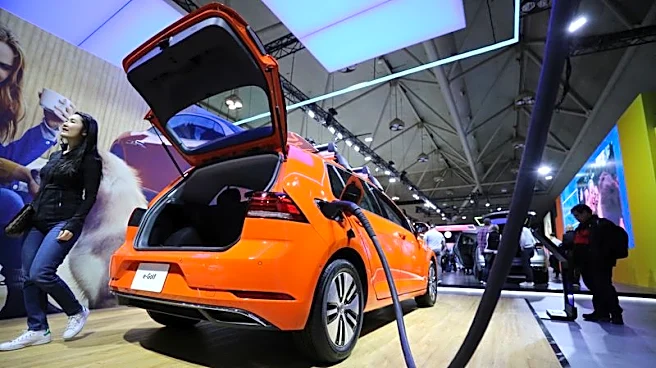
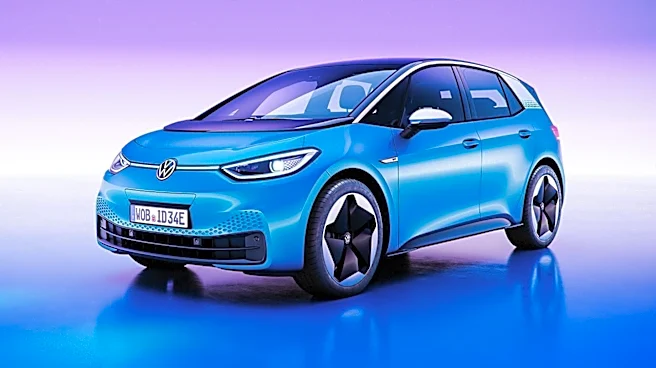
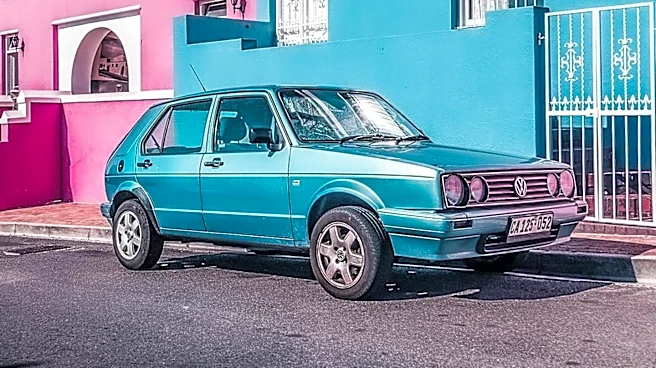
Volkswagen has reportedly halted development work on the electric Golf at its Wolfsburg site, a decision driven by the company's strained financial situation and ongoing cost-cutting measures. Thomas Schaefer, chief executive of Volkswagen's volume brands,
stated that the company 'simply can't afford this work right now,' despite the Golf's significance. A memo indicated that the Wolfsburg facility faces a €300 million ($336 million) gap against its savings target. This move is part of a broader restructuring plan that includes 100,000 job cuts and the potential closure of up to four German factories. The company recently reported a €5.8 billion operating loss in the third quarter and a €0.1 billion operating profit for the first nine months of the year, a significant drop from €5.4 billion in the same period of 2025.
Why It's Important?
The decision to halt development on the electric Golf, a historically iconic model for Volkswagen, underscores the severe financial pressures facing the automotive giant. For the U.S. market, this could signal a potential delay or alteration in the availability of future electric models from Volkswagen, impacting consumer choices and the pace of EV adoption. The broader restructuring plan, including job cuts and factory closures, reflects a global trend of automakers grappling with the high costs of transitioning to electric vehicles and intense market competition. This situation could lead to shifts in Volkswagen's global product strategy, potentially prioritizing other EV models or markets where profitability is more immediate. The financial strain also highlights the challenges of developing new, complex software architectures like SSP, which are crucial for the next generation of electric vehicles.
What's Next?
While development work on the electric Golf is paused, Volkswagen's works council has stated that this suspension will not postpone the vehicle's eventual launch, with lost time expected to be recovered. The ID. Golf is intended to be one of the first vehicles utilizing Volkswagen's SSP software architecture, a group-wide platform designed to reduce complexity and manufacturing costs, though its initial 2026 launch has been delayed. The company is committed to its restructuring plan, which aims to achieve significant cost savings. Tensions with the IG Metall union are also rising, with potential strike action from January 1. Volkswagen is targeting positive cash flow in Q4 2026, indicating a focus on immediate financial recovery.
Beyond the Headlines
The halting of the electric Golf's development reveals the profound economic challenges inherent in the automotive industry's pivot to electrification. It highlights the delicate balance between investing in future technologies and maintaining current financial stability. The delay in the SSP software architecture, a critical component for Volkswagen's next-gen EVs, suggests that technological innovation, while essential, is not immune to financial constraints. This situation could force automakers to make difficult choices about which projects to prioritize, potentially leading to a more focused but less diverse EV lineup in the short term. The broader implications include a potential slowdown in the rollout of advanced EV technologies and a re-evaluation of investment strategies across the industry, as companies seek to optimize profitability in a rapidly changing market.