


What's Happening?
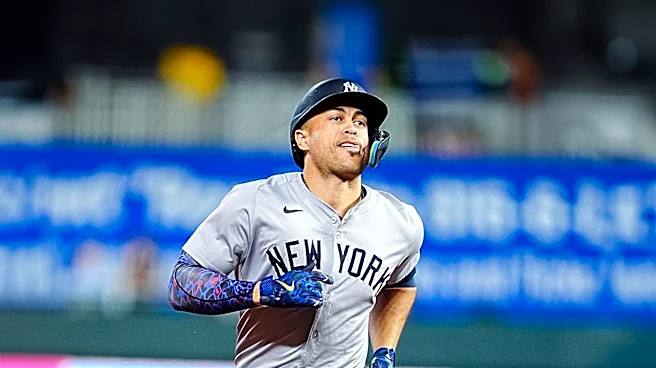
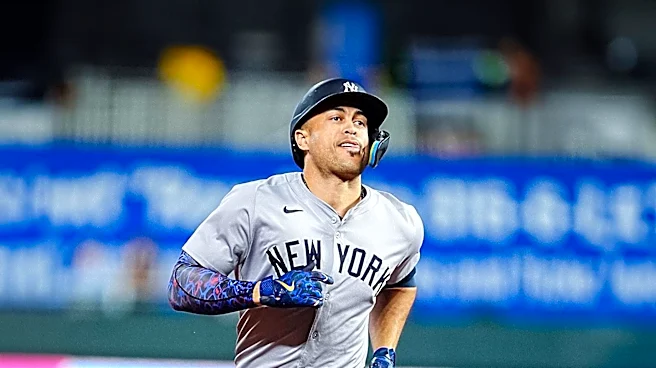
A recent proposal by Sportsnaut suggested a trade involving New York Yankees outfielder Giancarlo Stanton and New York Mets infielder Jorge Polanco. However, this is an external idea and not an indication of ongoing negotiations between the two teams.
A significant factor complicating any potential move for Stanton is his full no-trade clause, which grants him the power to approve or reject any trade. Financially, Polanco's salary for 2027 is listed at $23 million, while Stanton's is $25 million. The Miami Marlins are contributing $10 million annually to the Yankees from 2026 through 2028, reducing the Yankees' 2027 cash burden for Stanton to $15 million. This creates a potential $8 million difference against Polanco's salary, assuming the subsidy transfers with Stanton. Additionally, Stanton has a $25 million club option for 2028 with a $10 million buyout, which must be considered in any financial evaluation.
Why It's Important?
This situation highlights the complexities of player contracts and trade clauses in professional sports, particularly in Major League Baseball. For the Mets, acquiring Stanton would mean committing their designated hitter spot to a player with a history of injuries, which could limit their roster flexibility and ability to address other team needs. While Stanton offers significant power, his availability due to health concerns is a major consideration. For the Yankees, a trade would depend on Stanton's willingness to move and the financial implications, including the ongoing payments from the Marlins. The potential trade also underscores the strategic decisions teams face in balancing player performance, salary commitments, and roster construction, especially when dealing with high-profile players with substantial contracts and no-trade clauses.
What's Next?
For any trade involving Giancarlo Stanton to materialize, several key developments would be necessary. First, there would need to be credible reports of actual discussions between the New York Yankees and the New York Mets. Second, and crucially, Stanton himself would need to approve the move, given his full no-trade clause. Without his consent, no trade can proceed. Finally, details regarding the transfer of cash, particularly the payments from the Miami Marlins, would need to be clarified. Until these pieces fall into place, the discussion remains an offseason debate rather than an impending deal. The focus will continue to be on the contract and roster fit for both teams, rather than the immediate possibility of Stanton switching boroughs.
Beyond the Headlines
The discussion around Giancarlo Stanton's potential trade extends beyond simple player movement, touching upon the broader implications of long-term, high-value contracts in professional sports. The no-trade clause, a common feature in such contracts, grants significant power to players, allowing them to dictate their career paths to a certain extent. This can create challenges for teams looking to restructure their rosters or manage payrolls. Furthermore, the financial arrangements, such as the Marlins' ongoing payments to the Yankees, illustrate the intricate financial engineering involved in large-scale player transactions. These elements collectively influence team building strategies, player mobility, and the overall economic landscape of the league, impacting how teams plan for both immediate competitiveness and long-term sustainability.