


What's Happening?
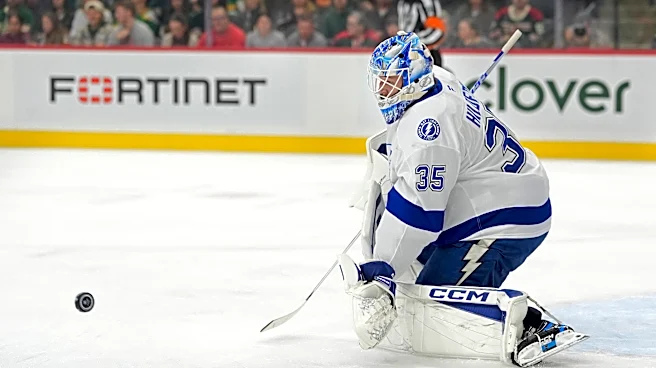
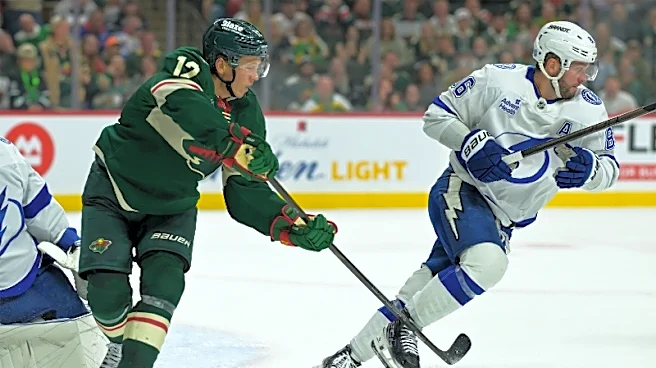
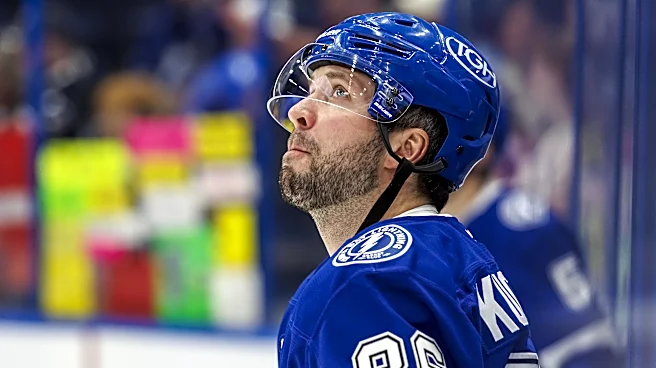
The Minnesota Wild's General Manager, Bill Guerin, is actively pursuing significant roster changes, including a potential bid for Tampa Bay Lightning winger Nikita Kucherov, who is set to become a free agent next July. This move is contingent on defenseman
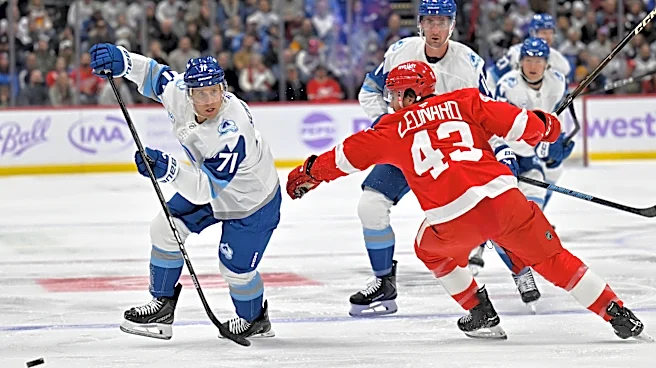
Quinn Hughes not signing an extension with the Wild. The team is projected to have nearly $46 million in cap space for the 2027-28 season, making a high-profile signing financially feasible. Guerin has a history of aggressive moves, having previously acquired Hughes from the Vancouver Canucks and attempting to secure center Dylan Larkin from the Detroit Red Wings. The strategy aims to build a Stanley Cup-contending team around key players like Kirill Kaprizov, who is reportedly good friends with Kucherov and would welcome playing alongside him.
Why It's Important?
This aggressive pursuit of top-tier talent by the Minnesota Wild signifies a clear intent to elevate the team into a consistent Stanley Cup contender. Acquiring a player of Nikita Kucherov's caliber, especially to play alongside Kirill Kaprizov, could create one of the most potent offensive lines in the NHL, significantly boosting the team's scoring power and overall competitiveness. However, this strategy carries inherent risks, particularly the potential loss of defenseman Quinn Hughes to free agency if an extension isn't secured. The departure of a key blueliner would create a significant defensive void, requiring further strategic adjustments. The financial commitment to a superstar like Kucherov also impacts future cap flexibility, potentially limiting other roster improvements. This approach reflects a growing trend in the NHL where teams with available cap space are willing to make bold moves to secure elite talent, aiming for immediate success rather than a prolonged rebuilding phase.
What's Next?
The immediate focus for the Minnesota Wild will be on the contract negotiations with defenseman Quinn Hughes, as his decision directly impacts the feasibility of pursuing Nikita Kucherov. If Hughes signs an extension, the Wild might need to re-evaluate their strategy for acquiring a top-tier forward. Conversely, if Hughes opts for free agency, the path to signing Kucherov becomes clearer, assuming the financial and strategic alignment holds. The Detroit Red Wings' stance on trading Dylan Larkin also remains a factor, as the Wild has previously shown interest. The upcoming free agency period next July will be critical for the Wild, as Kucherov's decision will shape the team's offensive core for the foreseeable future. Other teams, such as the Pittsburgh Penguins and Chicago Blackhawks, are also reportedly open to trades, indicating a dynamic market that the Wild will need to navigate.
Beyond the Headlines
The Wild's strategy highlights a broader philosophical shift in professional sports, where the pursuit of 'super teams' through high-profile free-agent signings and aggressive trades is becoming more prevalent. This approach, while potentially leading to immediate success, also raises questions about team chemistry, long-term sustainability, and the development of homegrown talent. The emphasis on pairing star players, such as Kaprizov and Kucherov, underscores the belief that elite offensive duos can drive championship aspirations. However, the potential trade-off, like losing a key defenseman such as Hughes, illustrates the delicate balance general managers must strike between offensive firepower and defensive solidity. This trend could lead to more volatile team rosters and increased competition for a limited pool of superstar players, potentially driving up player salaries and further concentrating talent among a few wealthy franchises.