




What's Happening?
A new art historian's guide delves into the Pre-Raphaelite Brotherhood, a group of 19th-century art students who rebelled against the conventional art of their time. Formed in 1848 by Dante Gabriel Rossetti, William Holman Hunt, and John Everett Millais,
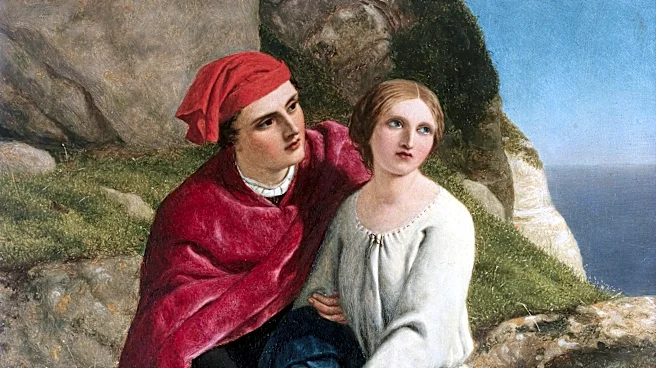
the Brotherhood sought to return to an artistic style predating Raphael, emphasizing jewel-toned colors, flat and evenly lit spaces, painstaking detail, and a focus on women as subjects. Their work, initially denounced by critics, has gained significant recognition over time, influencing modern aesthetics like cottagecore and dark academia. The guide highlights key characteristics of Pre-Raphaelite paintings, such as their luminous color palettes achieved by painting on white backgrounds, their rejection of chiaroscuro for consistent lighting, and their meticulous attention to detail, often imbued with symbolic meaning. The movement also notably depicted women with immense psychological depth, contrasting with the idealized and anonymous female figures prevalent in academic art.
Why It's Important?
The Pre-Raphaelite Brotherhood's enduring influence on art and culture is significant, as their aesthetic continues to resonate in contemporary visual trends and popular culture. Their rebellion against established artistic norms paved the way for new forms of expression and challenged the rigid conventions of the Royal Academy of Art. By focusing on emotional depth, vibrant colors, and intricate details, they offered an alternative to the perceived 'slosh' of their era, which prioritized idealized forms over realistic or emotionally charged depictions. The guide underscores how their work, once dismissed, now inspires modern artists and designers, demonstrating the long-term impact of artistic movements that dare to defy the status quo. Furthermore, their portrayal of women with individuality and complex emotions was progressive for Victorian England, contributing to a broader shift in how female subjects were represented in art.
What's Next?
The continued exploration and appreciation of the Pre-Raphaelite Brotherhood's work suggest a sustained interest in art movements that prioritize emotional authenticity and detailed craftsmanship. As new generations discover their art through guides and exhibitions, there may be further academic research and popular interpretations of their themes and techniques. The influence of their aesthetic on contemporary trends indicates that their visual language will likely continue to evolve and appear in various forms of media, from fashion to digital art. Future analyses might further connect their artistic principles to modern societal values, particularly in discussions around authenticity, emotional expression, and the role of art in reflecting or challenging cultural norms.
Beyond the Headlines
Beyond their immediate artistic impact, the Pre-Raphaelites' story reflects a broader cultural yearning for meaning and truth in an increasingly industrialized world. Their desire to infuse art with feeling and detail can be seen as a reaction against the perceived coldness and profit-driven nature of the Industrial Revolution. This resonates with contemporary concerns about the impact of technology, such as AI-generated content, on human creativity and authenticity. The Brotherhood's emphasis on individual expression and emotional depth offers a counter-narrative to the homogenization often associated with mass production and technological advancement. Their legacy thus extends beyond art history, serving as a reminder of the human need for beauty, emotion, and meticulous craftsmanship in an ever-evolving world.