


What's Happening?
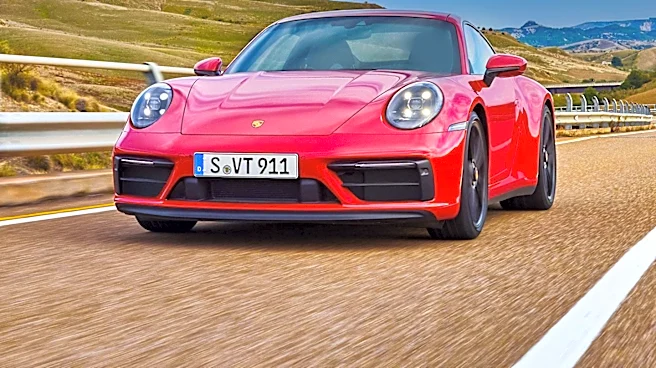
The 2027 Porsche 911 Carrera S will offer a manual transmission, a decision driven by strong demand from the North American market, according to Porsche North America CEO Timo Resch. This option was not part of the company's initial plans for the current
911 lineup. Resch explained that his team had to persuade their German counterparts by presenting evidence of significant customer interest in the U.S. The United States reportedly has a higher percentage of manual Porsche buyers compared to most other global markets. The 473-hp Carrera S, which is positioned between the base Carrera and higher-performance models, will now provide enthusiasts with the choice of a manual gearbox, a feature that was available in the previous generation.
Why It's Important?
This decision by Porsche highlights the unique and influential role of the U.S. market in shaping global automotive product offerings, particularly for niche segments like performance cars. While automatic transmissions (like Porsche's PDK) often offer superior performance metrics on track and convenience for daily driving, the continued demand for manual transmissions in the U.S. reflects a strong enthusiast culture that values driver engagement and a more traditional driving experience. This move could encourage other luxury and performance automakers to reconsider offering manual options in markets where such demand persists, potentially slowing the broader industry trend towards automatic-only powertrains. It also demonstrates the power of customer feedback and regional market dynamics in influencing product development decisions at a global level.
What's Next?
The reintroduction of the manual transmission for the 2027 Porsche 911 Carrera S is expected to be met with enthusiasm by U.S. customers who prefer a more engaging driving experience. Porsche will likely begin taking orders for the manual version, and its availability could influence sales figures for the Carrera S model in North America. This decision might also lead to further discussions within Porsche about offering manual options in other models or markets where similar demand could be cultivated. Competitors in the luxury sports car segment will likely observe the market's reaction to this move, potentially influencing their own product strategies regarding transmission choices. The focus will now shift to how this option is integrated into the broader 911 lineup and its impact on the brand's image among purists.
Beyond the Headlines
The return of the manual transmission to the Porsche 911 Carrera S for the U.S. market is more than just a product decision; it's a cultural statement. In an era dominated by advanced technology, autonomous driving aspirations, and the push towards electric vehicles, the manual gearbox represents a connection to the fundamental act of driving. It speaks to a segment of consumers who prioritize tactile feedback, control, and the art of driving over sheer speed or convenience. This move by Porsche underscores a broader appreciation for heritage and driver involvement, suggesting that even as the automotive industry evolves, there remains a significant value placed on traditional driving dynamics. It also highlights the ongoing debate within the automotive community about the future of driving pleasure in an increasingly automated world.