








What's Happening?
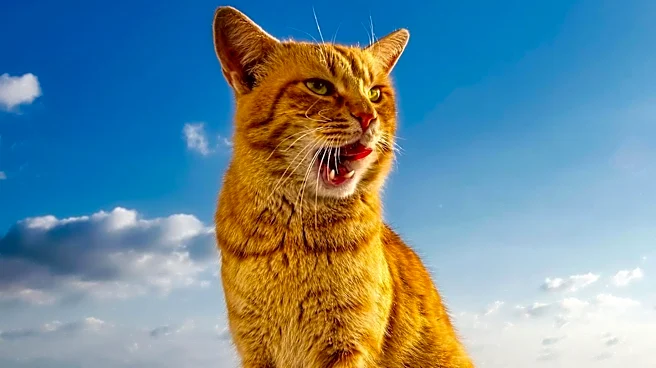
Mary Zournazi, an award-winning Australian documentarian, has released her latest film, 'Acropolis Cats & Other Wondrous Animals.' The documentary, which premiered at the Melbourne Documentary Film Festival, begins with the stray cats of Athens and expands
to explore the bond between humans and animals across Greece, Australia, and beyond. The film delves into themes of compassion, forgiveness, and the kind of species humans aspire to become. Zournazi's work is influenced by filmmakers like Agnes Varda and Wim Wenders, and she emphasizes empathy as a practice rather than an instinct. The film connects animals with broader issues such as COVID, war, and climate crisis, aiming to show how compassion is indivisible.
Why It's Important?
The documentary's exploration of empathy and compassion is significant in today's world, where crises often dominate the narrative. By focusing on tenderness and small acts of care, Zournazi challenges audiences to reconsider their interactions with both humans and animals. This approach could influence public discourse on how society addresses issues like homelessness, animal welfare, and environmental conservation. The film's emphasis on empathy over outrage offers a fresh perspective that could inspire more inclusive and compassionate public policies and societal attitudes.
What's Next?
Following its premiere, 'Acropolis Cats & Other Wondrous Animals' will be screened alongside Zournazi's previous works as part of her 'Greek Trilogy' in a special retrospective. This event may further elevate discussions on the themes presented in the film, potentially influencing future documentary projects and public conversations about empathy and compassion. The film's reception could also impact Zournazi's future endeavors, possibly encouraging her to continue exploring similar themes in her work.
Beyond the Headlines
The film raises deeper questions about the human condition and our role in the world. By portraying animals as witnesses to human history, Zournazi invites viewers to consider alternative perspectives on historical events. This approach challenges anthropocentric narratives and encourages a more holistic understanding of history and current events. The documentary also suggests that peace and compassion begin with everyday acts of care, a notion that could reshape how individuals and communities approach conflict resolution and social justice.