




What's Happening?
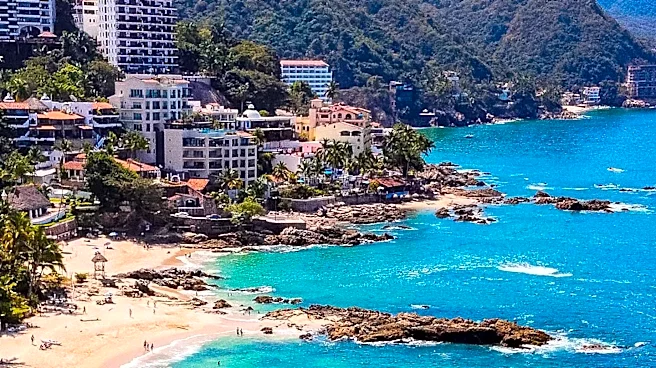
Mazatlán, Mexico, is gaining recognition as an affordable and authentic beach destination, offering a distinct experience compared to more popular Mexican tourist spots like Cancún, Los Cabos, and Puerto Vallarta. The city, a major functioning port, was
not originally built for tourism but has increasingly attracted visitors due to its unique blend of culture, history, and value. U.S. travelers can now fly nonstop to Mazatlán (MZT) from five major hubs: Los Angeles, Dallas/Fort Worth, Phoenix, Houston, and Minneapolis. Accommodations are significantly cheaper, with oceanfront rooms available for around $150 USD per night, and dining costs are also considerably lower than in other resort towns. Mazatlán is characterized by distinct neighborhoods, including the historic Centro Histórico with its European architecture, the vibrant Malecón boardwalk, and the Zona Dorada offering oceanfront resorts.
Why It's Important?
The rise of Mazatlán as an accessible and budget-friendly destination provides a significant alternative for U.S. travelers seeking an authentic Mexican experience without the inflated costs often associated with established resort areas. This trend could diversify tourism flows from the U.S. to Mexico, potentially distributing economic benefits to different regions and supporting local businesses that cater to a more culturally immersive travel style. For U.S. consumers, it offers a more economical option for international travel, especially appealing to those looking to maximize their vacation budget. The city's appeal to domestic tourists, combined with its growing international recognition, suggests a shift in travel preferences towards destinations that offer a blend of local culture and modern amenities, while still maintaining a sense of authenticity.
What's Next?
As Mazatlán's popularity grows, it is anticipated that more U.S. travelers will discover its unique offerings, potentially leading to increased tourism development and infrastructure improvements. The city's current status as a 'working city' with a strong domestic tourist base is changing rapidly, indicating that the window for experiencing its current authentic vibe may be limited before mass tourism takes over. While the U.S. State Department maintains a Level 4 travel advisory for Sinaloa, it explicitly carves out an exception for government employees to visit key tourist areas like the Zona Dorada, Centro Histórico, and the Malecón, suggesting a nuanced approach to safety concerns. The continued positive experiences reported by hundreds of thousands of tourists visiting annually, as reflected in a high Traveler Safety Index score, will likely encourage more visitors.
Beyond the Headlines
Mazatlán's emergence highlights a broader trend in tourism where travelers are increasingly seeking destinations that offer cultural immersion and value over purely resort-centric experiences. The city's ability to maintain its 'authentic Mexican' character while accommodating growing tourism presents a case study in sustainable tourism development. The contrast with more commercialized destinations like Cancún underscores the challenge of balancing economic growth from tourism with the preservation of local culture and environment. The ongoing travel advisory for Sinaloa, despite the carve-outs for tourist zones, also brings to light the complex interplay between geopolitical perceptions, safety concerns, and the reality on the ground for travelers. This situation prompts reflection on how travel advisories influence tourist behavior and how destinations can effectively manage their image and safety perceptions.