




What's Happening?
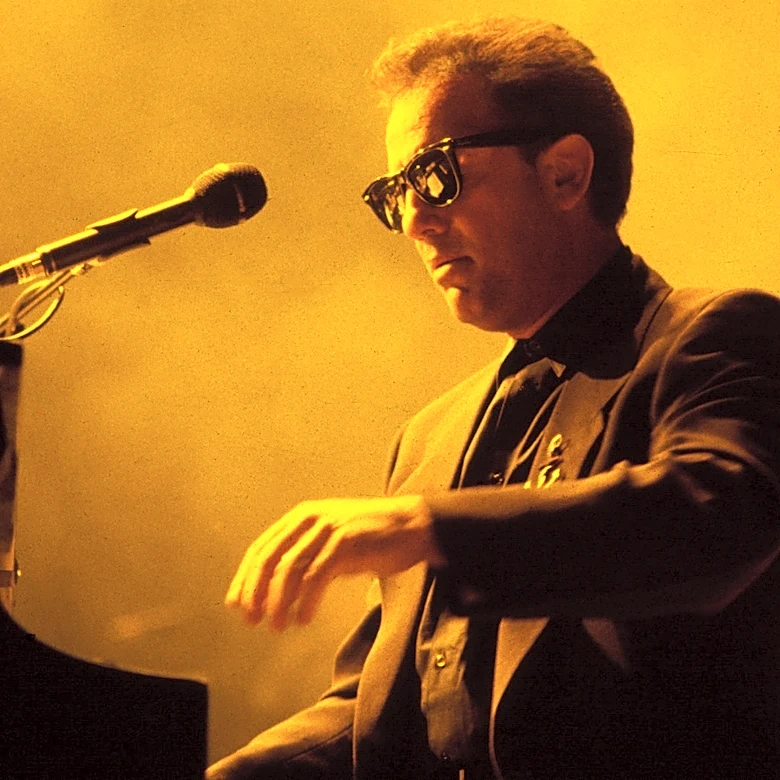
Billy Joel's 1989 hit song, 'We Didn't Start the Fire,' is a rapid-fire chronicle of 118 significant historical events that occurred between 1948 and 1989. The song was conceived after a conversation Joel had with Sean Lennon, who expressed that it was a 'terrible
time' to be young. Joel, on the eve of his 40th birthday, responded by illustrating that every generation faces its own set of challenges, encapsulating four decades of history into a single track. The song covers a wide range of topics, including political figures, international conflicts, cultural phenomena, and social issues, without breaking stride or losing momentum. Despite its commercial success and ubiquitous presence on MTV, the song is sometimes maligned for its 1980s production style, yet it is recognized for its inventive and comprehensive historical narrative.
Why It's Important?
The song's importance lies in its unique approach to historical storytelling, serving as a condensed, accessible, and memorable overview of a significant period in U.S. and world history. For many, it acts as a cultural touchstone, prompting reflection on the events that shaped the latter half of the 20th century. It highlights the continuous nature of global challenges and societal changes, suggesting that each generation inherits a complex world. The song's enduring popularity underscores the human desire to understand historical context and the shared experience of living through tumultuous times. It also demonstrates the power of popular music to educate and provoke thought, making history digestible and engaging for a broad audience. The track's ability to resonate across generations speaks to the timelessness of its central message about the relentless march of history.
What's Next?
While 'We Didn't Start the Fire' is a historical snapshot, its themes of continuous global events and societal challenges remain relevant. The song's structure and concept could inspire future artists to create similar chronicles of contemporary history, reflecting on events from 1989 to the present day. Given the current global climate, a modern equivalent could offer a powerful commentary on recent decades. The song also continues to be a subject of academic and popular analysis, with ongoing discussions about its historical accuracy, cultural impact, and musical merit. Its use in educational settings as a tool for teaching history is also likely to persist, providing a unique and engaging way to introduce students to key events and figures.
Beyond the Headlines
The song's deeper implication lies in its philosophical message about the human condition and the perception of historical burden. Joel's response to Sean Lennon's lament—that 'it was always burning, since the world's been turning'—suggests a cyclical view of history, where each generation faces its own 'fire' of challenges. This perspective can be both comforting and sobering, implying that while problems are constant, humanity has always found ways to navigate them. The song implicitly critiques the tendency to view one's own era as uniquely difficult, encouraging a broader historical perspective. It also touches on the role of media and popular culture in shaping collective memory, as the song itself became a part of the historical narrative it sought to describe. The 'greasiness' of its 80s production, often cited as a flaw, can also be seen as an authentic artifact of its time, further embedding it within the historical period it covers.