







What's Happening?
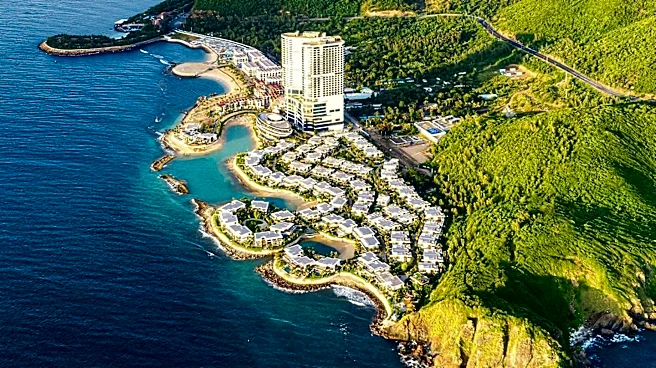
Hoban Group, through its subsidiary Hoban Hotels & Resorts, has signed an investment agreement with Gangwon State and Goseong County to develop a new international leisure and tourism destination in Hwajinpo, Goseong County, South Korea. The company plans
to invest 680 billion won (approximately $459 million) to construct a complex featuring 450 guest rooms, dining, leisure, and shopping facilities on a 170,000 square meter site in Choda-ri, Hyeonnae-myeon. This project aims to leverage Hwajinpo's natural environment and tourism resources to create a new tourism hub. The agreement outlines that Hoban Hotels & Resorts will focus on investment and job creation, while Gangwon State and Goseong County will provide administrative and financial support. The necessary permit procedures for a revised tourism development plan have been completed, and groundbreaking is targeted for the first half of next year, following building design review.
Why It's Important?
This significant investment by Hoban Group underscores a broader strategy to expand tourism infrastructure beyond established areas and stimulate regional economies in South Korea. The development of a large-scale resort in Hwajinpo is expected to create numerous jobs and attract both domestic and international tourists, thereby boosting local commerce and services. This initiative aligns with the South Korean government's policy priority of decentralizing tourism, which aims to spread the economic benefits of the tourism boom to regional areas struggling with depopulation. By creating new attractions and connecting them with existing natural and cultural sites, the project seeks to encourage longer stays and increased spending by visitors, contributing to the revitalization of the local economy in Gangwon State.
What's Next?
Following the completion of permit procedures, Hoban Hotels & Resorts will proceed with the building design review, with groundbreaking anticipated in the first half of next year. The construction phase will involve significant development of the 450-room complex, including various amenities. Local authorities in Gangwon State and Goseong County are expected to provide ongoing administrative and financial support as outlined in the investment agreement. The success of this project could serve as a model for future regional tourism developments, potentially encouraging other major corporations to invest in similar initiatives across South Korea. The focus will be on integrating the new resort with existing tourism attractions around Hwajinpo to create a cohesive and appealing destination.
Beyond the Headlines
The Hwajinpo resort project reflects a strategic shift in South Korea's tourism development, moving towards creating integrated leisure destinations that offer diverse experiences beyond the capital city. This approach not only aims to enhance the country's appeal to a wider range of tourists but also addresses critical demographic challenges, such as regional depopulation. By fostering economic growth and job opportunities in rural areas, such projects can help retain local populations and attract new residents. The emphasis on utilizing natural environments and cultural resources for tourism development also highlights a growing trend towards sustainable and experience-based travel, which could lead to a more balanced and resilient tourism industry in South Korea. The long-term success of such ventures will depend on effective collaboration between private developers and local governments, as well as the ability to adapt to evolving tourist preferences.