







What's Happening?
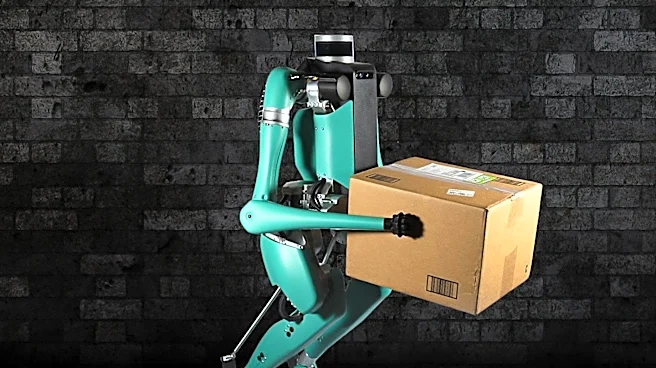
Agility Robotics, a leading humanoid robotics and physical AI company, is significantly expanding the commercial deployment of its Digit humanoid robot. The company announced an expanded relationship with existing customer GXO, which will see Digit deployed
at two additional U.S. facilities in Statesville, North Carolina, and Lebanon, Tennessee, starting in early 2027. This builds on Digit's previous work at GXO's Georgia facility since 2024. Furthermore, Agility Robotics has secured three new enterprise manufacturing customers, including a major global automaker, one of the world's largest developers of automotive technology and components, and a leading global consumer products manufacturer. These new customers are participating in paid programs focused on specific manufacturing needs, laying the groundwork for potential larger-scale deployments. Agility Robotics also has an active pipeline of over 30 prospective customers across various industries, including automotive manufacturing, logistics, e-commerce, agricultural equipment, consumer products, and defense. The company's CEO, Peggy Johnson, is scheduled to host an investor call to discuss this commercial progress and outlook.
Why It's Important?
This expansion signifies a critical step in the commercialization of humanoid robots in the U.S. and globally. The increased adoption by major logistics and manufacturing companies like GXO and the unnamed new clients indicates a growing confidence in the practical utility and return on investment of humanoid robots in industrial settings. This trend could lead to significant shifts in labor markets, particularly in sectors facing labor shortages or those with repetitive, physically demanding tasks. For U.S. industries, the deployment of Digit robots could enhance operational efficiency, reduce labor costs, and improve safety in environments that are hazardous for human workers. The move also highlights the U.S.'s position in the advanced robotics sector, with Agility Robotics demonstrating a track record of commercial deployment. The success of these deployments could accelerate further investment and development in physical AI, potentially creating new job categories related to robot management, maintenance, and integration, while also displacing some existing manual labor roles.
What's Next?
Agility Robotics plans to begin deployments at the new GXO facilities in early 2027, initially using Digit 4, with a transition to Digit 5 as it becomes commercially available. The three new manufacturing customers are currently in paid pilot programs, which could lead to broader deployments if successful. Agility Robotics is also actively engaging with over 30 prospective customers through commercial discussions or its Customer Acceleration Program, suggesting further expansion in the near future. The company is preparing to become a public entity through a business combination with Churchill Capital Corp XI, expected to close in the fourth quarter of 2026, after which it will trade on Nasdaq under the ticker symbol 'AGLT.' This public listing could provide additional capital for research, development, and scaling production. Agility Robotics is also investing in infrastructure, including its RoboFab manufacturing facility in Salem, Oregon, designed for an annual production capacity of up to 10,000 robots, and its cloud-based platform, Agility Arc, for managing robot fleets.
Beyond the Headlines
The increasing deployment of humanoid robots like Digit raises deeper questions about the future of work and the societal impact of advanced automation. While proponents argue that robots will fill labor gaps and take on dangerous jobs, concerns about job displacement and the need for workforce retraining will likely grow. The ethical implications of robots working alongside humans, particularly regarding safety and human-robot interaction, will become more prominent. Furthermore, the development of 'physical AI' could lead to a redefinition of human capabilities and roles in the workplace, pushing society to consider new economic models and social safety nets. The competitive landscape in robotics, particularly between the U.S. and other global players, will also intensify, potentially leading to strategic national investments and policies aimed at fostering domestic robotics industries. The long-term integration of these robots into daily operations could fundamentally alter supply chains, manufacturing processes, and the overall economic structure.