






What's Happening?
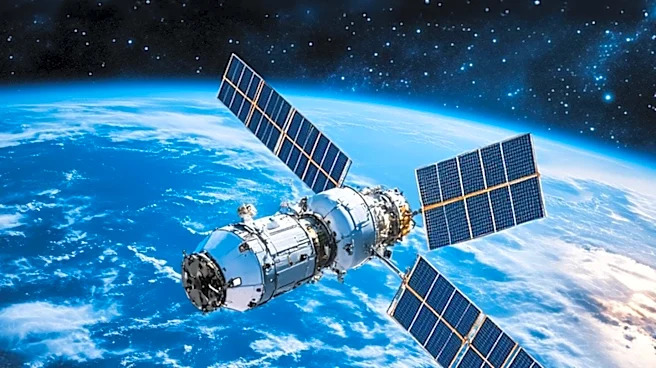
Amazon Leo has filed an application with the Federal Communications Commission (FCC) to deploy 5,105 low Earth orbit satellites as part of its direct-to-device (D2D) mega-constellation. This initiative aims to enhance mobile connectivity by integrating
Amazon Leo's infrastructure with Globalstar's spectrum, satellites, and ground network. The project is set to expand from emergency messaging to include voice, data, and industrial IoT services. Amazon is acquiring Globalstar for $11.57 billion, with the deal expected to close in 2027. Additionally, Amazon Leo seeks to utilize Iridium's exclusive frequencies outside the U.S., despite RocketLab's interest in acquiring Iridium for $8 billion. Amazon Leo assures the FCC that it will take necessary steps to avoid harmful interference while co-existing with other frequency users.
Why It's Important?
The deployment of Amazon Leo's satellite constellation represents a significant advancement in global mobile connectivity, particularly in underserved regions. By leveraging Globalstar's existing infrastructure, Amazon aims to provide comprehensive mobile services that could transform communication capabilities in remote areas. This move positions Amazon as a formidable competitor in the satellite communication market, challenging established players like SpaceX's Starlink and other satellite-to-phone services. The initiative could potentially disrupt traditional mobile networks by offering an alternative means of connectivity, thereby impacting telecom operators and consumers alike. The success of this project could lead to increased competition and innovation in the satellite communication industry.
What's Next?
Amazon Leo's next steps involve finalizing the acquisition of Globalstar and securing the necessary regulatory approvals for frequency usage. The company will need to address potential interference issues and collaborate with other frequency users to ensure seamless operation. As the project progresses, Amazon Leo will likely focus on building and launching the satellite constellation, with a target completion date aligned with the Globalstar acquisition closure in 2027. The company may also explore partnerships with telecom operators to integrate its services into existing mobile networks, thereby expanding its market reach.