



What's Happening?
MSITEK, a global SAP partner and digital transformation company, participated in the Retail Innovation Lab during New York Fashion Week (NYFW). The event, a collaboration between NYFW Collections and SAP, served as a platform for MSITEK to present its
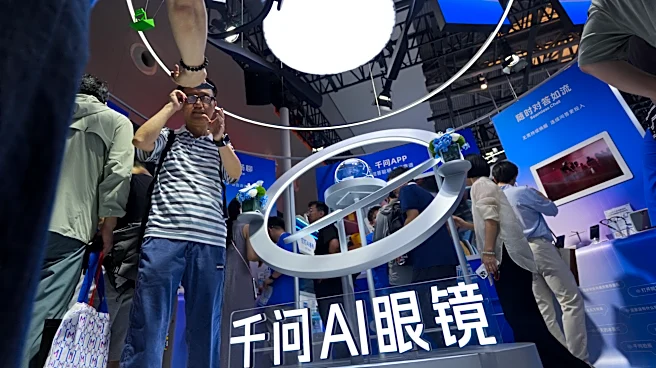
Smart Retail AI application. This solution is designed to integrate AI-powered intelligence with store data, aiming to assist retail leaders in identifying losses, forecasting demand, and converting data into actionable insights. The application facilitates smarter inventory management, streamlines operations, and enhances overall store performance. MSITEK's involvement highlights the growing intersection of technology, fashion retail, and innovation, providing an opportunity for the company to exchange ideas and demonstrate how AI can deliver tangible business outcomes within the fashion industry. The Retail Innovation Lab itself focuses on showcasing connected customer journeys and retail operations, emphasizing how AI, customer intent, and real-time store signals can create more personalized experiences throughout the fashion retail process.
Why It's Important?
MSITEK's participation in the NYFW Retail Innovation Lab signifies a critical shift in the fashion retail landscape, where technological integration, particularly AI, is becoming indispensable. The introduction of AI-powered solutions like MSITEK's Smart Retail application can significantly impact U.S. fashion businesses by optimizing operational efficiencies and improving customer experiences. For retailers, this means better inventory control, reduced waste from overstocking or stockouts, and more accurate demand forecasting, which directly affects profitability. The emphasis on personalized customer experiences through AI also addresses evolving consumer expectations, potentially leading to increased customer loyalty and sales. This development underscores a broader trend where technology companies are becoming key players in traditional industries, driving innovation and competitiveness. Businesses that adopt such AI solutions stand to gain a significant advantage in a highly competitive market, while those that lag may face challenges in keeping up with industry standards and consumer demands.
What's Next?
The demonstration of MSITEK's Smart Retail AI application at NYFW suggests a future where AI will play an increasingly central role in fashion retail operations. Following this showcase, MSITEK will likely pursue further collaborations with fashion brands and retailers looking to adopt advanced AI solutions. The company's focus on turning enterprise technology into measurable business impact indicates a strategic push to integrate its AI platform, Business Data Cloud, and S/4HANA expertise into the retail sector. We can anticipate more fashion retailers exploring and implementing similar AI-driven tools to enhance their supply chain management, customer engagement, and overall business intelligence. This could lead to a wider adoption of AI in areas such as predictive analytics for fashion trends, personalized marketing campaigns, and automated customer service, further transforming how fashion businesses operate and interact with their clientele.
Beyond the Headlines
The integration of AI into fashion retail, as exemplified by MSITEK's Smart Retail application, extends beyond mere operational efficiency; it touches upon ethical and societal implications. The use of AI for demand forecasting and personalized experiences raises questions about data privacy and consumer surveillance. As AI systems collect and analyze vast amounts of customer data, ensuring transparency and ethical data handling becomes paramount. Furthermore, the increased automation and AI-driven decision-making could impact employment within the retail sector, potentially shifting job roles from manual tasks to those requiring technological oversight and data analysis. This technological evolution also highlights a cultural shift in the fashion industry, traditionally driven by human creativity and intuition, now increasingly influenced by data-driven insights. The long-term impact could be a more efficient, responsive, and personalized retail experience, but it also necessitates a careful consideration of the ethical frameworks governing AI deployment in consumer-facing industries.