







What's Happening?
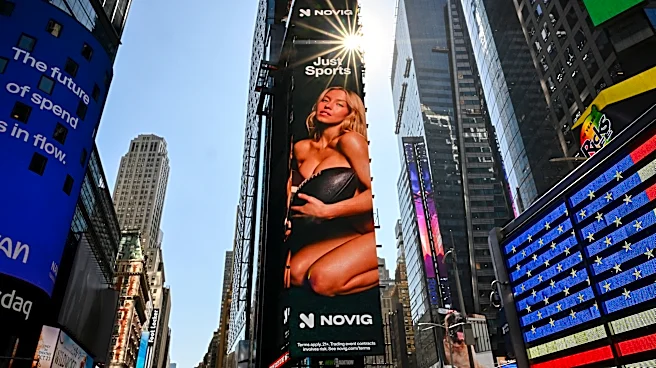
Kelly Stafford, wife of Los Angeles Rams quarterback Matthew Stafford, has publicly voiced her disapproval of a controversial sports betting advertisement featuring actress Sydney Sweeney. The ad, for Novig, depicts Sweeney partially nude and covered
by sports equipment, which has drawn criticism from women in sports who feel it sexualizes their careers. Stafford, a mother of four girls, reposted an Instagram message from influencer Daniel Hong, which emphasized the distinction between 'attention' and 'value.' Hong's message, which Stafford endorsed with multiple 'THIS' comments, suggests that while appearance can garner attention, likes, and opportunities, these do not equate to true value. Olympic swimming champion Ariarne Titmus also called the campaign 'a kick in the face' to women working to advance sports. Novig CEO Jacob Fortinsky stated that Sweeney was heavily involved in the ad's visuals and messaging, and that the company supports women's sports, clarifying that Sweeney is an actress and not intended to portray female athletes.
Why It's Important?
This incident highlights a significant cultural debate surrounding the portrayal of women in advertising, particularly when it intersects with sports. The criticism from figures like Kelly Stafford and Ariarne Titmus underscores a growing demand for respectful and empowering representations of women, especially in fields traditionally dominated by men. For the sports industry, this controversy could influence how brands approach endorsements and marketing campaigns, pushing them towards more inclusive and less objectifying content. For advertisers, it serves as a cautionary tale about potential backlash and the importance of understanding audience sensitivities. The distinction between 'attention' and 'value' raised by Hong and echoed by Stafford resonates with broader societal discussions about self-worth and media influence, particularly on young girls. This event could prompt a re-evaluation of marketing strategies to ensure they align with contemporary values and avoid alienating key demographics, including female athletes and their supporters.
What's Next?
The controversy surrounding Sydney Sweeney's sports betting ad is likely to continue generating discussion within the sports and advertising industries. Brands and celebrities involved in future campaigns may face increased scrutiny regarding their messaging and imagery, particularly concerning gender representation. This could lead to a shift towards more thoughtful and less provocative advertising strategies that prioritize empowerment and authenticity over sensationalism. Stakeholders, including sports organizations, athletes, and advocacy groups, may intensify their efforts to promote positive portrayals of women in sports and media. Companies might also engage in more extensive market research and focus group testing to gauge public reaction before launching campaigns. The ongoing dialogue could also influence public perception of both the brands and the celebrities involved, potentially impacting their reputations and consumer loyalty.
Beyond the Headlines
The controversy surrounding Sydney Sweeney's ad delves into deeper societal issues concerning the commodification of women's bodies and the persistent challenge of gender equality in sports. The ad's reception reflects a broader cultural shift where audiences are increasingly vocal about media representations and demand accountability from brands and public figures. This incident highlights the ethical tightrope advertisers walk when leveraging celebrity influence, especially when the content risks undermining the achievements and professionalism of women in specific fields. It also brings to light the double standards often applied to women in the public eye, where their physical appearance can overshadow their professional accomplishments. The discussion initiated by Stafford and Titmus contributes to a larger movement advocating for a more equitable and respectful media landscape, challenging the long-standing practice of using sexualized imagery to capture attention, and pushing for a redefinition of what constitutes 'value' in the public sphere.