






What's Happening?
Recent fiction films are increasingly depicting documentarians not as objective storytellers, but as predatory and narcissistic figures. This trend moves beyond earlier portrayals where the documentarian was seen as exploiting subjects, instead focusing
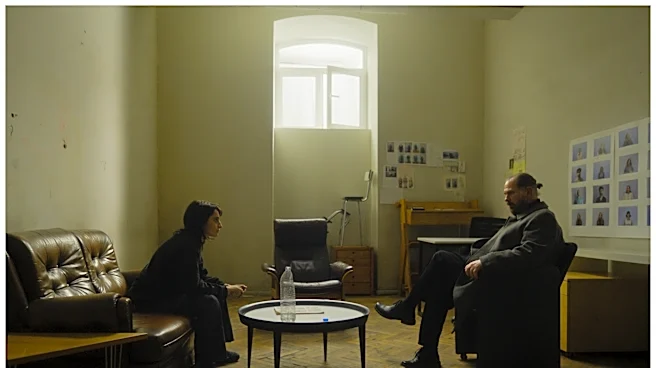
on their inherent character flaws. The actual work, style, or content of contemporary documentary filmmaking is often secondary to the portrayal of the documentarians themselves as the central problem. These films suggest a disfigured character within documentarians, exposing secret failings. For instance, in 'Oh, Canada' (dir. Paul Schrader, 2024), the famed political documentarian Leonard Fife is interviewed using an 'Interrotron,' a device that creates an illusion of direct eye contact. Despite the technical details and flattery, the film quickly shifts its focus to Fife's past as a 'cad' who recklessly seduced women, cheated on his wife, and abandoned his son, rather than his filmmaking career. This narrative choice implies that the documentary impulse itself is a pathology to be examined, highlighting cruelty and mendacity behind the image of an activist filmmaker.
Why It's Important?
This evolving portrayal of documentarians in fiction reflects a broader societal anxiety about accountability and the nature of truth in an increasingly image-saturated world. By presenting documentarians as inherently flawed or even dangerous, these films tap into a growing skepticism towards media and information sources. This narrative can influence public perception of documentary as a genre, potentially eroding trust in non-fiction storytelling and those who create it. The shift from critiquing the 'violence of the documentary image' (exploitation, manipulation) to critiquing the documentarian's character suggests a desire to find a singular entity to blame for perceived ethical breaches in media. This scapegoating, as the source notes, has a 'sad irony,' given documentary's historical role in holding power accountable. The implication that one must choose between being a 'vampiric documentarian' or a 'good parent' simplifies complex ethical considerations within filmmaking and may discourage critical engagement with the medium itself.
What's Next?
If this trend continues, it could lead to a further erosion of public trust in documentary filmmaking and potentially impact funding and support for independent documentarians. Filmmakers might face increased scrutiny regarding their personal lives and motivations, rather than their artistic or journalistic integrity. This could also prompt a defensive reaction from the documentary community, leading to more self-reflexive works that address these criticisms directly or efforts to re-emphasize ethical guidelines and transparency in their practice. Audiences, influenced by these fictional narratives, may approach documentaries with a heightened sense of suspicion, questioning the motives and character of the filmmakers rather than engaging with the subject matter. This could inadvertently contribute to a more cynical media landscape where the pursuit of truth is overshadowed by personal attacks and character assassinations.
Beyond the Headlines
The deeper implication of these fictional portrayals lies in their reflection of a cultural struggle with authenticity and accountability in the digital age. As the source suggests, 'the violence of the documentary image—exploitation, manipulation, trespass, dissimulation—is increasingly present in all our lives,' yet accountability becomes 'ever more diffuse.' By personifying these anxieties in the figure of the 'predatory narcissist' documentarian, fiction films offer a simplified target for complex societal concerns about media ethics and the impact of visual information. This narrative also touches upon the ethical dilemmas inherent in storytelling, particularly when dealing with real lives and sensitive subjects. The focus on the documentarian's personal failings rather than the systemic issues of media production or consumption highlights a societal tendency to individualize blame, potentially distracting from broader discussions about media literacy, critical thinking, and the responsibilities of both creators and consumers of information. It suggests a longing for clear heroes and villains in a world where moral lines are increasingly blurred.