







What's Happening?
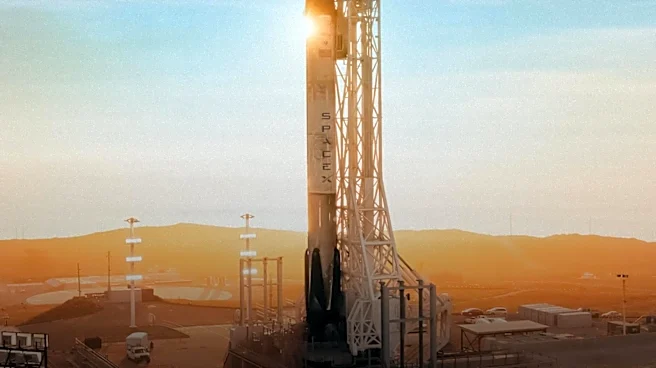
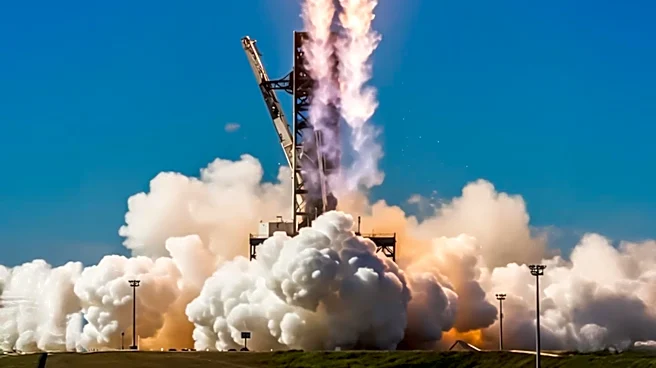
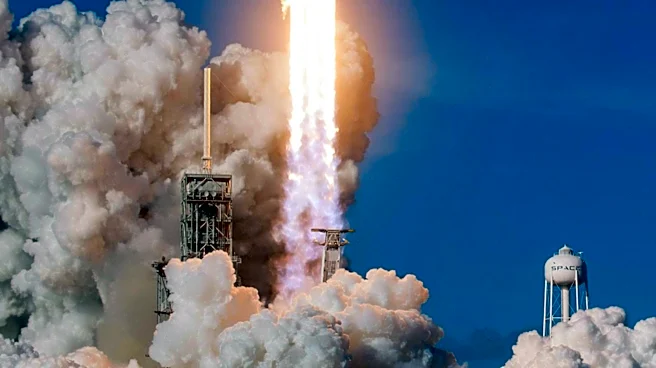
SpaceX has set a new record by launching its Falcon 9 booster for the 36th time, supporting the Starlink 10-42 mission. This mission added 29 more broadband internet satellites to SpaceX's low Earth orbit constellation, which now includes over 10,700
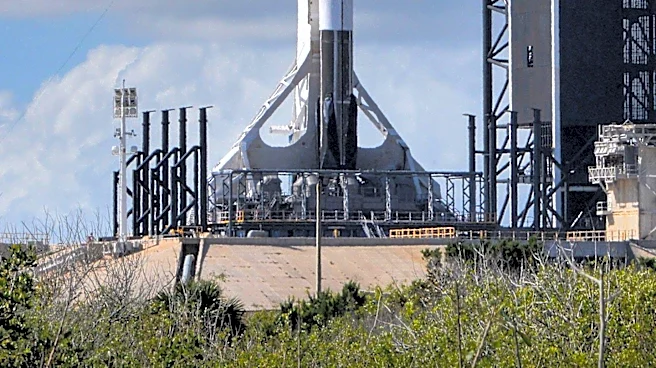
satellites. The launch took place from Space Launch Complex 40 at Cape Canaveral Space Force Station at 5:25 a.m. EDT. The Falcon 9 booster, designated B1067, has been in service since June 2021 and has supported various missions, including NASA's Commercial Resupply Services and crewed missions. The booster successfully landed on the drone ship 'A Shortfall of Gravitas' in the Atlantic Ocean, marking the 160th landing for this vessel.
Why It's Important?
This launch underscores SpaceX's continued innovation in rocket reusability, which significantly reduces the cost of space travel and satellite deployment. The expansion of the Starlink network enhances global internet connectivity, particularly in remote and underserved areas. This development is crucial for bridging the digital divide and providing reliable internet access worldwide. Additionally, the success of reusable rockets like the Falcon 9 booster demonstrates the potential for sustainable space exploration and commercial spaceflight, paving the way for future missions and technological advancements.
What's Next?
SpaceX is expected to continue expanding its Starlink constellation, with more launches planned to increase coverage and improve service quality. The company is also likely to focus on further enhancing the reusability of its rockets, aiming for even more launches per booster. As the Starlink network grows, regulatory and environmental considerations will become increasingly important, particularly regarding space debris management and spectrum allocation. SpaceX's advancements in these areas will be closely watched by industry stakeholders and regulatory bodies.