






What's Happening?
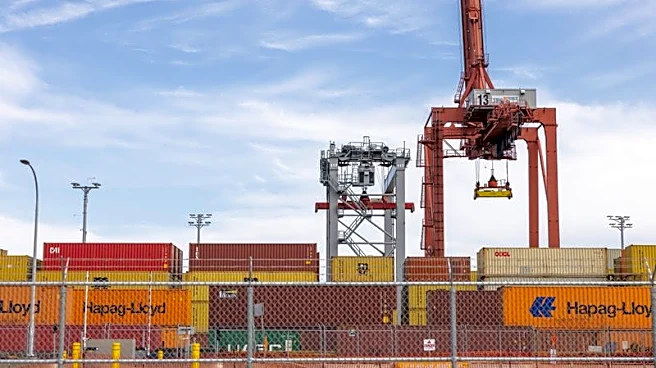
The United States has implemented 50% tariffs on approximately $20 billion worth of Canadian goods, effective August 22, 2026. This action follows the breakdown of trade negotiations between the two countries, which concluded without an agreement after
nearly two weeks of intensive talks. Canadian Prime Minister Mark Carney announced the suspension of negotiations, citing 'last-minute changes in the U.S. proposed terms' as unfair and uneconomic. The tariffs, imposed under Section 338 of the Tariff Act of 1930, will affect various Canadian exports, including hockey sticks, building materials, liquors, and certain clothing items. Prime Minister Carney has vowed immediate retaliation, stating Canada will match the tariffs 'dollar for dollar' to protect its workers and businesses. U.S. Trade Representative Jamieson Greer stated that Canada 'declined to finalize the trade deal under the terms agreed earlier this week' and that new demands from Canada upended the careful balance reached in prior days.
Why It's Important?
This escalation in trade tensions between the U.S. and Canada carries significant economic implications for both nations. The imposition of 50% tariffs on $20 billion worth of Canadian goods will directly impact U.S. consumers through potentially higher prices on imported products and could disrupt established supply chains. For Canadian industries, these tariffs threaten market access and profitability, potentially leading to job losses and reduced economic activity. The retaliatory tariffs promised by Canada will further exacerbate the situation, creating a cycle of protectionist measures that could harm businesses and consumers on both sides of the border. The U.S. Chamber of Commerce has warned that such tariffs could damage both economies, increase costs for U.S. families, and jeopardize the 13 million American jobs dependent on the North American trade pact. This trade dispute also highlights the fragility of international trade relations and the potential for political disagreements to translate into tangible economic consequences.
What's Next?
Following the implementation of U.S. tariffs, Canada is expected to enact its promised retaliatory tariffs, matching the U.S. duties dollar for dollar. This will likely lead to a further escalation of the trade dispute. The new U.S. tariffs, imposed under Section 338 of the Tariff Act of 1930, are almost certain to face legal challenges. Stakeholders, including businesses and industry groups in both countries, will be closely monitoring the situation and assessing the impact on their operations. The Canadian Chamber of Commerce has already expressed concern, calling the situation 'a body blow to North American competitiveness.' The breakdown of talks suggests a prolonged period of trade friction, with potential for further negotiations or interventions from political leaders to de-escalate the situation. The response from Canadian provinces, some of which had previously imposed bans on American alcohol sales, will also be a key factor in the unfolding events.
Beyond the Headlines
The current trade dispute between the U.S. and Canada extends beyond immediate economic impacts, touching upon deeper issues of national sovereignty and the reliability of international agreements. Prime Minister Carney's statement, "Canada has what the world wants. And we will not allow any nation to determine our future," underscores a growing sentiment of national self-reliance in the face of perceived unfair trade practices. The use of Section 338 of the Tariff Act of 1930, a previously unused presidential authority, sets a precedent for future trade disputes and could signal a more aggressive U.S. stance in international trade negotiations. This situation also highlights the complex interplay between federal and provincial governments in Canada, as evidenced by the pushback from provincial premiers regarding the lifting of bans on American alcohol sales. The long-term implications could include a re-evaluation of trade dependencies, a shift in global supply chains, and a potential weakening of established multilateral trade frameworks.