
What's Happening?
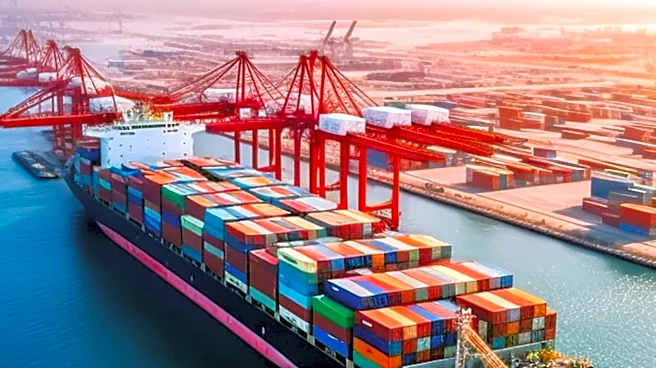
The Port of Oakland and the U.S. Army Corps of Engineers have formalized an agreement to advance the $640 million Turning Basins Widening Project. This project aims to accommodate larger, more modern ships
at the city’s commercial docks. The recently signed design agreement signifies the project's transition from the study phase to active development. Construction is slated to commence in 2028 and is expected to conclude by 2030. This initiative is a crucial step in upgrading the port's infrastructure to meet the demands of contemporary maritime shipping, ensuring the port remains competitive and efficient in handling global trade. The collaboration between the Port of Oakland and a federal agency underscores the significant investment and strategic planning involved in enhancing national port capabilities.
Why It's Important?
This $640 million project is vital for the U.S. economy and global trade, particularly for the West Coast. By enabling the Port of Oakland to handle larger, more modern vessels, it will significantly increase the port's capacity and efficiency. This enhancement will reduce shipping times and costs, benefiting businesses that rely on international trade for importing and exporting goods. The ability to accommodate bigger ships means more cargo can be processed, which can alleviate supply chain pressures and support economic growth in the region and nationally. Furthermore, the modernization of port infrastructure is crucial for maintaining the competitiveness of U.S. ports against international counterparts, ensuring that the country remains a key player in global commerce. The project will also create jobs during its construction phase and potentially more long-term positions in port operations and logistics.
What's Next?
Following the signing of the design agreement, the project will now move into detailed planning and preparatory stages before construction begins in 2028. Over the next few years, the Port of Oakland and the U.S. Army Corps of Engineers will likely focus on finalizing engineering designs, securing necessary permits, and preparing for the procurement of construction services. Stakeholders, including shipping companies, logistics providers, and local businesses, will be closely monitoring the project's progress, anticipating the benefits of increased capacity and efficiency. The successful completion of this project by 2030 is expected to usher in a new era of enhanced maritime trade capabilities for the Port of Oakland, potentially influencing shipping routes and logistics strategies across the Pacific.
Beyond the Headlines
The Turning Basins Widening Project at the Port of Oakland represents more than just an infrastructure upgrade; it reflects a broader strategic imperative for the U.S. to adapt its critical infrastructure to evolving global trade demands. The trend towards larger container ships necessitates continuous investment in port dredging and widening projects to prevent bottlenecks and maintain economic fluidity. This project also highlights the complex interplay between local port authorities and federal agencies in funding and executing large-scale infrastructure developments. The long-term implications include potential shifts in regional economic power, environmental considerations related to dredging and increased shipping traffic, and the ongoing challenge of balancing economic growth with ecological sustainability in coastal areas. It underscores the critical role of robust port infrastructure in national security and economic resilience.