




What's Happening?
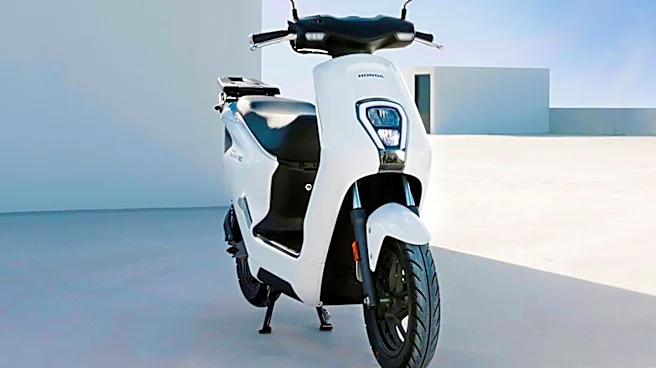
Honda has launched its UC3 electric scooter in Vietnam and Thailand, with recent dealership incentives bringing the price in Vietnam down to approximately $2,100. The UC3 is designed as an electric equivalent to a 110cc gasoline scooter, intended for
daily transportation rather than recreational use. It features a 6 kW (8 hp) electric motor, a top speed of about 50 mph (80 km/h), and a 3.2 kWh lithium iron phosphate (LFP) battery offering up to 76 miles (122 km) of range under WMTC testing. Unlike other Honda electric scooters, the UC3's battery is permanently installed and charges on the scooter. Additional features include a full-color TFT display, smartphone connectivity, three riding modes, reverse gear, and a 26-liter under-seat storage compartment. Despite its affordability and practicality, Honda has not announced any plans to sell the UC3 in the United States.
Why It's Important?
The absence of the Honda UC3 electric scooter in the U.S. market highlights the differing consumer preferences and regulatory environments between the United States and Southeast Asian countries. In much of Southeast Asia, scooters are a primary mode of daily transport for commuting and shopping, fostering a robust market for practical, small-displacement vehicles. Conversely, the U.S. market for motorcycles is predominantly recreational, with a comparatively smaller demand for small, practical scooters. This market disparity, coupled with the costs associated with U.S. regulatory certification, establishing parts and service support, and meeting consumer expectations for highway-capable motorcycles, likely makes the business case for introducing the UC3 in the U.S. less attractive for Honda. This decision reflects a strategic focus on regions where such vehicles have established utility and demand, rather than attempting to cultivate a niche market in the U.S.
What's Next?
While Honda has not indicated any immediate plans to introduce the UC3 electric scooter to the U.S. market, the evolving landscape of urban mobility and increasing interest in electric vehicles could potentially shift market dynamics in the long term. Should there be a significant increase in demand for affordable, practical electric scooters for urban commuting in American cities, Honda might re-evaluate its strategy. However, for the foreseeable future, the UC3 will remain exclusive to markets like Vietnam and Thailand, where it aligns with existing transportation needs and infrastructure. Any future U.S. launch would likely depend on a substantial change in consumer behavior, regulatory incentives for small electric vehicles, or a strategic shift by Honda to tap into emerging urban mobility trends in the U.S.
Beyond the Headlines
The decision by Honda not to bring the UC3 electric scooter to the U.S. market underscores broader challenges and opportunities within the electric vehicle industry. It highlights how market segmentation and regional consumer habits heavily influence product availability. While the U.S. is seeing a surge in electric car adoption, the electric scooter segment faces different hurdles, including infrastructure for charging, safety perceptions, and competition with other micro-mobility solutions like e-bikes and ride-sharing services. The UC3's design, optimized for dense urban environments and daily utility, contrasts with the U.S. preference for larger, more powerful vehicles, even in the electric segment. This situation also points to a potential gap in the U.S. market for truly affordable and practical electric personal transportation that could address urban congestion and last-mile delivery challenges, if consumer perceptions and regulatory frameworks were to evolve.