





What's Happening?
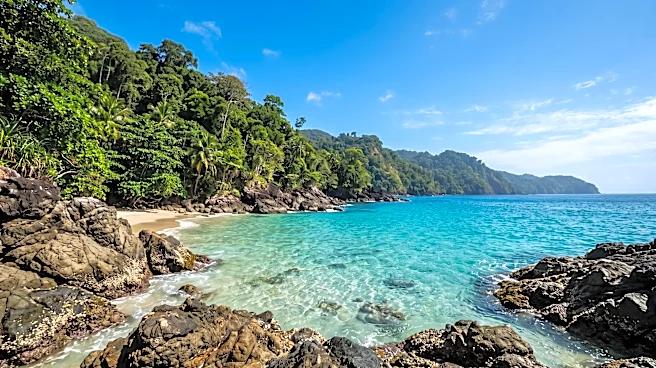
An old guidebook for Tobago asserts that the island served as the inspiration for Daniel Defoe's renowned 1719 novel, 'Robinson Crusoe.' This claim is part of a long-standing debate regarding the real-life influences behind Defoe's work. While the story
is often linked to the experiences of Scottish sailor Alexander Selkirk, who was marooned on Más a Tierra in the Juan Fernández Islands, the guidebook suggests Tobago's proximity to the mouth of the Orinoco River, as described in the novel, supports its case. Selkirk's ordeal involved being left on an island in 1704 after deeming his ship unseaworthy, and he was rescued over four years later. The novel itself recounts the tale of a sailor shipwrecked on a remote island, a narrative that has captivated readers for centuries. The guidebook's argument highlights Tobago's historical role in inspiring tales of adventure and isolation.
Why It's Important?
This discussion is important for literary history and cultural tourism, particularly for Tobago. If the claim holds significant weight, it could enhance Tobago's appeal as a destination for literary enthusiasts and those interested in historical inspirations behind classic works. For the U.S. audience, this connection could foster a deeper appreciation for the origins of English literature and encourage travel to the Caribbean, impacting the tourism sector. The debate also underscores the complex nature of literary creation, where authors often draw from multiple sources and personal accounts rather than a single, direct inspiration. Understanding these influences enriches the reading experience and provides context for how fictional narratives are constructed from real-world elements. It also highlights how local histories and guidebooks can contribute to broader cultural narratives.
What's Next?
The debate surrounding Tobago's influence on 'Robinson Crusoe' is likely to continue, fueled by literary scholars and local tourism boards. Further research into Defoe's potential sources and travel accounts of the period could shed more light on the matter. For Tobago, promoting this historical and literary connection could become a key aspect of its tourism marketing, potentially attracting more visitors interested in exploring the landscapes that might have inspired such a famous tale. Literary organizations and academic institutions might also engage in discussions or conferences to explore these historical links, potentially leading to new interpretations of the novel and its geographical context. The ongoing interest in the novel ensures that its origins will remain a subject of fascination.
Beyond the Headlines
Beyond the direct claim, this story touches on the broader theme of how real-world locations and events are transformed into enduring literary works. It raises questions about the interplay between fact and fiction, and how historical accounts, even if not directly replicated, can shape imaginative narratives. The enduring appeal of 'Robinson Crusoe' itself, nearly three centuries after its publication, speaks to universal themes of survival, isolation, and human ingenuity. The discussion about Tobago's role also highlights the power of local narratives and how they can intersect with global cultural phenomena. It encourages a deeper look into the cultural heritage of places like Tobago, which often hold rich, untold stories that contribute to the tapestry of world literature and history.