







What's Happening?
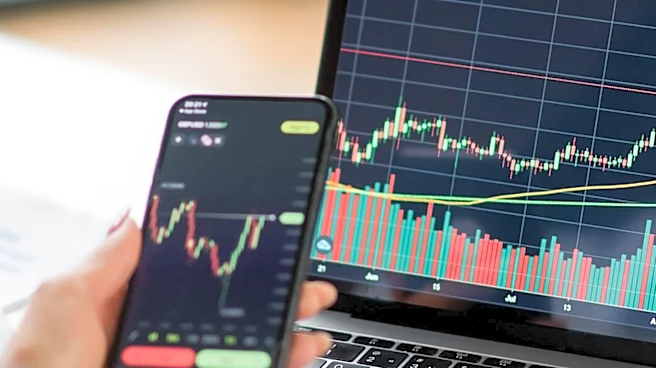
Prediction markets, platforms where individuals can bet on the outcomes of various events, are gaining attention for their potential to provide more accurate forecasts in areas such as climate change and political events. These markets, exemplified by
platforms like Kalshi and Polymarket, allow participants to place bets on the likelihood of specific outcomes, effectively turning individual judgments into quantifiable odds. This approach could help improve the accuracy of climate forecasts by incentivizing forecasters to provide more precise predictions. The concept is that by betting on outcomes, forecasters are encouraged to base their predictions on solid data rather than on potentially biased or manipulated information. This method could also be applied to political events, offering a more immediate and potentially accurate reflection of public sentiment compared to traditional polling methods.
Why It's Important?
The use of prediction markets could significantly impact how information is processed and utilized in both climate science and political forecasting. By providing a financial incentive for accuracy, these markets could reduce the influence of biased reporting and manipulated data, leading to more reliable forecasts. This is particularly crucial in climate science, where accurate predictions are essential for policy-making and resource allocation. In the political realm, prediction markets could offer a faster and potentially more accurate alternative to traditional polling, which often lags behind real-time events. This could influence how political campaigns are conducted and how media outlets report on political developments, potentially leading to a more informed public.
What's Next?
As prediction markets continue to evolve, their regulatory landscape is likely to change. Currently, there are discussions in the U.S. Congress about regulating these platforms to prevent misuse, such as insider trading. Additionally, as more stakeholders recognize the potential of prediction markets, there may be increased interest in integrating them into decision-making processes across various sectors. This could lead to broader acceptance and utilization of these markets, potentially transforming how forecasts are made and how information is disseminated.
Beyond the Headlines
The ethical implications of prediction markets are significant. While they offer a promising tool for improving forecast accuracy, they also pose risks of misuse, particularly if used to manipulate markets or political outcomes. The transparency and democratization of information that these markets provide could be a double-edged sword, offering both opportunities for greater insight and risks of exploitation. As such, careful consideration and regulation will be necessary to ensure that prediction markets are used ethically and effectively.