








What's Happening?
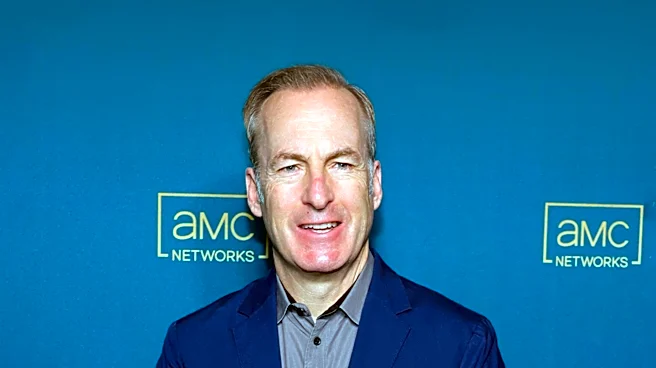
Bob Odenkirk, known for his role as Saul Goodman in 'Breaking Bad' and 'Better Call Saul,' shared his thoughts on hope and human limitations in a recent interview with the New York Times. Odenkirk emphasized the importance of striving for improvement
despite inherent human flaws. He discussed his career trajectory, including his recent work on the series 'Lucky Hank,' which was canceled after one season. Odenkirk's reflections highlight his belief in the necessity of hope for a better future, even in the face of life's challenges. His career, marked by roles in critically acclaimed series, underscores his influence in the entertainment industry.
Why It's Important?
Odenkirk's insights resonate with broader societal themes of resilience and optimism. His perspective on human limitations and the need for hope can inspire audiences to reflect on their own lives and aspirations. As a prominent figure in television, Odenkirk's views carry weight and can influence public discourse on personal growth and societal progress. His career achievements, including multiple Emmy nominations, demonstrate the impact of perseverance and adaptability in the entertainment industry. Odenkirk's reflections may encourage others in the industry to pursue meaningful and challenging roles that contribute to cultural conversations.
Beyond the Headlines
Odenkirk's comments also touch on the philosophical aspects of human existence, questioning the nature of progress and fulfillment. His acknowledgment of life's imperfections and the pursuit of hope can be seen as a commentary on the human condition. This perspective aligns with the themes explored in his work, where characters often grapple with moral and existential dilemmas. Odenkirk's ability to blend humor with profound observations offers a unique lens through which audiences can explore complex issues. His reflections may prompt discussions on the role of entertainment in addressing deeper societal and personal questions.