






What's Happening?
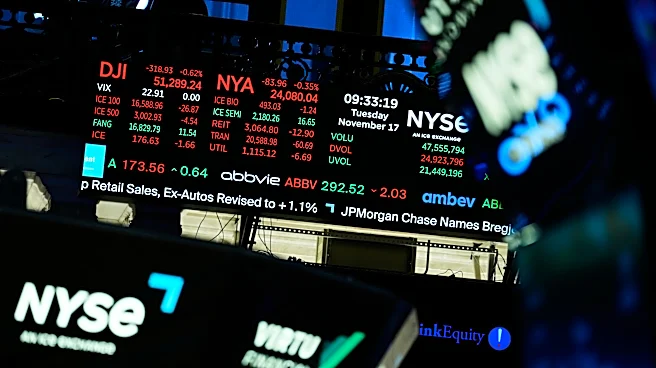
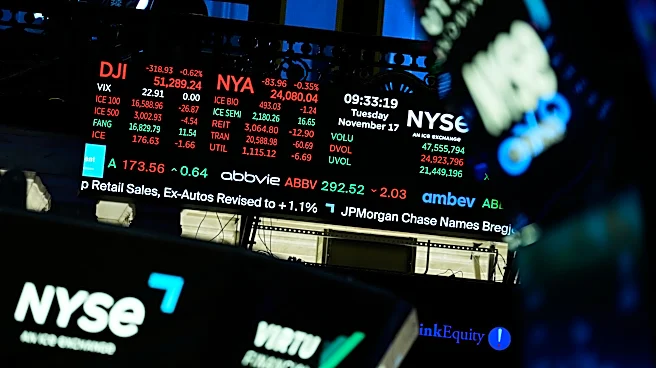
Bitcoin has fallen below the $60,000 mark, trading at $59,000, as a widespread risk-off sentiment grips global markets. This decline is occurring alongside significant losses in other assets, including gold and silver, which have hit new lows, and a substantial
drop in major stock indices like the Nasdaq and S&P 500. Experts attribute this market behavior to several factors, including uncertainty surrounding President Trump’s Iran war, high inflation exacerbated by the war and tariffs, concerns about the artificial intelligence (AI) boom being overextended, and fears of continued high interest rates. Additionally, a 'Blue Tsunami' in midterm elections has raised concerns about increased regulations on data centers. The sell-off is also fueled by traders opening short positions in the perpetual futures market and a significant outflow of approximately $580 million from U.S. spot Bitcoin ETFs on Thursday. Analysts note that Bitcoin is behaving more like a tech stock than a traditional store of value, making it susceptible to broader tech sector pullbacks.
Why It's Important?
The current market downturn, characterized by Bitcoin's drop below $60,000 and broader asset sell-offs, signals a significant shift in investor sentiment towards risk aversion. This trend impacts U.S. financial markets by increasing volatility and potentially leading to further capital outflows from speculative assets like cryptocurrencies and tech stocks. The correlation of Bitcoin's performance with tech stocks, particularly during periods of economic uncertainty, challenges its narrative as a safe-haven asset or a hedge against inflation. This could lead to a re-evaluation of investment strategies by both institutional and retail investors, potentially shifting capital towards more traditional, less volatile assets. The substantial outflow from U.S. spot Bitcoin ETFs indicates a cooling interest or increased caution among investors who previously used these vehicles for exposure to cryptocurrency. The broader economic concerns, including geopolitical tensions and inflation, suggest a challenging environment for growth-oriented investments.
What's Next?
Market participants anticipate continued volatility as investors navigate the current risk-off environment. The immediate future for Bitcoin and other digital assets will likely depend on broader macroeconomic developments, including any de-escalation of geopolitical tensions, signs of inflation cooling, and clarity on future interest rate policies from the Federal Reserve. Analysts suggest that if the $58,000 support level for Bitcoin breaks, further declines could occur, prompting continued dollar-cost averaging strategies for long-term investors. The performance of the tech sector, particularly AI-related stocks, will also be a key indicator for Bitcoin's trajectory, given their observed correlation. A potential 'surprise' positive news event could trigger the next market rally, but many investors are expected to remain on the sidelines awaiting confirmation. The VIX, Wall Street's fear gauge, crossing 30 suggests that much of the panic selling may already be underway, potentially signaling a local bottom, though a rapid rebound is not guaranteed.
Beyond the Headlines
The current market dynamics highlight a deeper re-evaluation of asset classes and investment philosophies. Bitcoin's behavior as a tech stock rather than a store of value could lead to a fundamental shift in how it is perceived and integrated into diversified portfolios. This period of heightened fear and deleveraging may also expose vulnerabilities in the broader financial system, particularly concerning highly leveraged positions in speculative assets. The unwinding of the AI trade, coupled with geopolitical instability and inflationary pressures, points to a complex interplay of factors that could reshape global economic policies and investment trends for years to come. Furthermore, the increased scrutiny on tech companies and potential regulatory changes following midterm elections could have long-term implications for innovation and market competition, indirectly affecting the broader digital asset ecosystem.