







What's Happening?
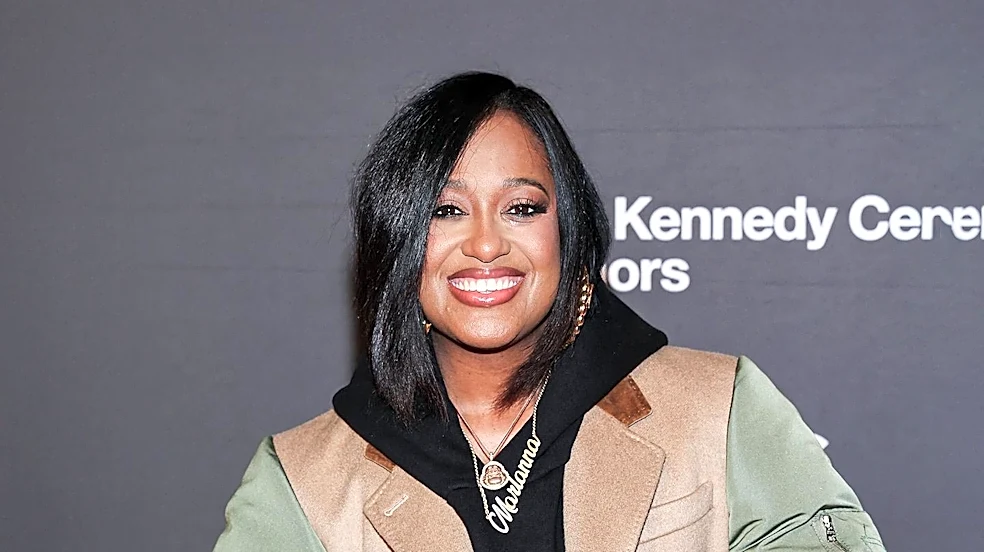
North Carolina MC Rapsody has publicly rejected the label of 'Christian rapper,' stating that she considers herself a 'truth teller' rather than fitting into a narrow category. In an interview with NPR, she explained that while her latest album, 'God
Gotta Afro & Gold Hoops,' incorporates themes of faith, it also addresses politics and everyday life. Rapsody clarified that the album's title is not intended to confine the divine to a single appearance, but rather to encourage listeners to recognize themselves within the divine and consider a presence beyond any singular image. This stance aligns with her previous pushback in 2024 against the separation of 'female' Hip-Hop from the broader culture, extending her argument to the religious themes present in her work. The album's creation was also influenced by her travels to Ghana and South Africa, and an Afrofuturism exhibition at the Smithsonian, which sparked questions about Black identity and ancestry. She recorded much of the project in Johannesburg, aiming to create a record that preserves Black culture and explores belief for future generations.
Why It's Important?
Rapsody's rejection of the 'Christian rapper' label is significant for several reasons within the music industry and broader cultural discourse. Firstly, it challenges the tendency to pigeonhole artists based on specific thematic elements in their work, particularly when those themes touch upon religion. This can limit an artist's creative freedom and audience reach. By asserting her identity as a 'truth teller,' Rapsody advocates for a more expansive understanding of artistic expression in Hip-Hop, where diverse themes can coexist without rigid categorization. Secondly, her comments contribute to an ongoing conversation about representation and authenticity in Hip-Hop. Her previous stance against separating 'female' Hip-Hop and her current rejection of the 'Christian rapper' label highlight a desire to break down artificial boundaries that can marginalize artists. This is particularly relevant in an industry where artists, especially women and those exploring spiritual themes, often face pressure to conform to specific molds. Lastly, the album's inspiration from African travel and Afrofuturism underscores the importance of cultural preservation and the exploration of Black identity within contemporary music, offering a rich tapestry of influences that transcends simplistic labels.
What's Next?
Rapsody's continued artistic output and public statements will likely further shape discussions around genre classification and artistic freedom in Hip-Hop. Her commitment to exploring diverse themes, including faith, politics, and Black identity, suggests that her future projects will continue to challenge conventional categorizations. The reception of 'God Gotta Afro & Gold Hoops' and its thematic depth may encourage other artists to resist restrictive labels and embrace a more holistic approach to their craft. Furthermore, her emphasis on cultural preservation and the exploration of Black experiences, particularly through her international travels and engagement with Afrofuturism, could inspire a broader trend within Hip-Hop to delve into similar themes. This might lead to more nuanced and culturally rich narratives emerging from the genre, moving beyond commercially driven tropes. The ongoing dialogue she initiates about the intersection of faith, culture, and artistic expression will likely resonate with both artists and audiences seeking more authentic and multifaceted musical experiences.
Beyond the Headlines
Beyond the immediate implications for Rapsody's career, her stance touches upon deeper societal and cultural issues regarding identity and categorization. The impulse to label and categorize individuals and their work often stems from a need for simplification and understanding, but it can also lead to oversimplification, misrepresentation, and the reinforcement of stereotypes. In the context of Hip-Hop, a genre historically rooted in diverse experiences and expressions, such labels can inadvertently limit its expansive nature. Rapsody's assertion of being a 'truth teller' rather than a 'Christian rapper' highlights the ethical dimension of artistic integrity and the right of artists to define their own narratives. It also subtly critiques the commercial pressures that often push artists into marketable niches. Culturally, her work, informed by Afrofuturism and African heritage, contributes to a growing movement of artists reclaiming and redefining Black identity on their own terms, challenging dominant narratives and fostering a more inclusive understanding of cultural expression. This broader shift encourages a more critical engagement with how we categorize art and artists, urging a move towards appreciation of complexity and individuality.