
What's Happening?
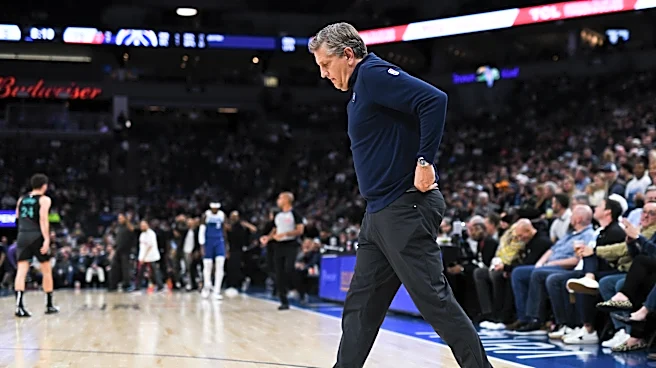
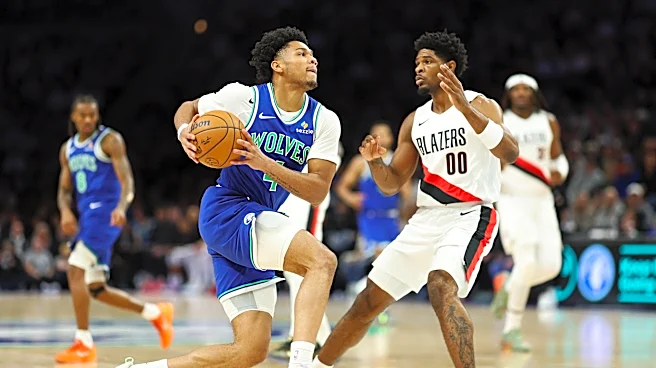
Minnesota Timberwolves head coach Chris Finch was assessed a technical foul during the first half of Thursday night's game against the New York Knicks. With 27.8 seconds remaining in the opening quarter, Finch directed a comment at a referee, stating,
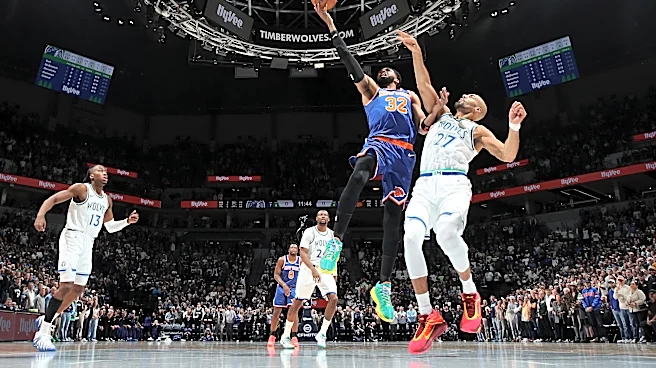
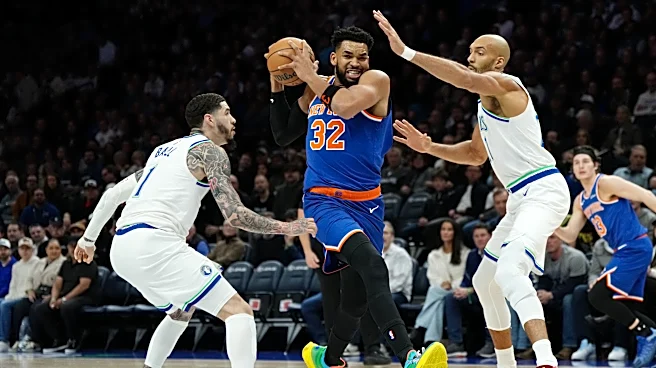
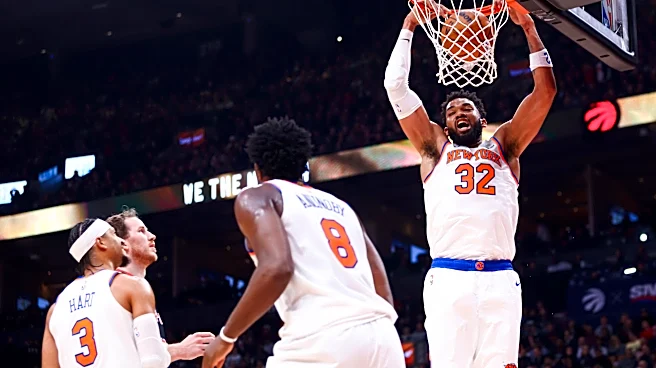
"No one came to watch you." This incident occurred while the Knicks held a 31-26 lead at the Target Center. This is not Finch's first encounter with officials; he was previously ejected from a December 19 game against the Oklahoma City Thunder last season, receiving two technical fouls, and was later fined $35,000 by the NBA for improper language and delaying his departure from the court. He also faced an ejection on January 29, 2025, against the Phoenix Suns for derogatory comments towards the officiating crew. Despite the technical foul, the Knicks continued to extend their lead, entering halftime with a 65-50 advantage. New York demonstrated strong shooting, hitting 57.1% from the field and 10 of 16 three-pointers in the first half. Former Timberwolves player Karl-Anthony Towns contributed significantly with 17 points and eight rebounds before the break.
Why It's Important?
This event highlights the ongoing tension between NBA coaches and game officials, a dynamic that frequently influences game flow and team morale. Technical fouls and ejections can disrupt a team's strategy and leadership on the court, potentially impacting game outcomes. For the Timberwolves, Finch's technical foul did not spark a turnaround, as the team continued to fall behind the Knicks. Such incidents can also lead to financial penalties for coaches and may contribute to a perception of officiating bias or inconsistency, which can be a point of contention for fans and teams alike. The repeated nature of Finch's confrontations with officials suggests a pattern that could lead to more severe penalties in the future, potentially affecting his ability to coach from the sidelines during critical games. This situation underscores the pressure coaches face and the fine line they walk in expressing frustration without crossing disciplinary boundaries set by the league.
What's Next?
Following this technical foul, the NBA will likely review the incident, though a single technical foul typically does not result in immediate further action beyond the in-game penalty. However, given Finch's history of technical fouls and ejections, including a $35,000 fine last season for improper language, future similar incidents could lead to more significant disciplinary measures from the league. These could include additional fines or even suspensions, which would directly impact the Timberwolves' coaching stability and performance. The team will need to manage Finch's interactions with officials to avoid further disruptions. For the Timberwolves, the immediate focus will be on their upcoming games and addressing the performance issues highlighted by the loss to the Knicks, particularly their defensive struggles against strong offensive teams. The team's 11-4 record entering the game suggests they are a competitive force, but managing emotional outbursts from their head coach will be crucial for sustained success.
Beyond the Headlines
The recurring nature of coach-official confrontations in professional sports, as exemplified by Chris Finch, points to broader issues within the competitive environment of the NBA. These interactions often reflect the intense pressure on coaches to win and their perception of fair play. While a coach's passion can be seen as a positive, repeated outbursts can also signal a breakdown in communication or respect between teams and officiating crews. This dynamic can influence the league's efforts to maintain sportsmanship and the integrity of the game. Furthermore, such incidents contribute to the narrative surrounding officiating quality, which is a constant topic of discussion among fans and media. The league continuously evaluates officiating standards and coach conduct, and high-profile incidents like Finch's can sometimes lead to internal reviews or adjustments in how rules are enforced or how coaches are expected to conduct themselves on the sidelines.