






What's Happening?
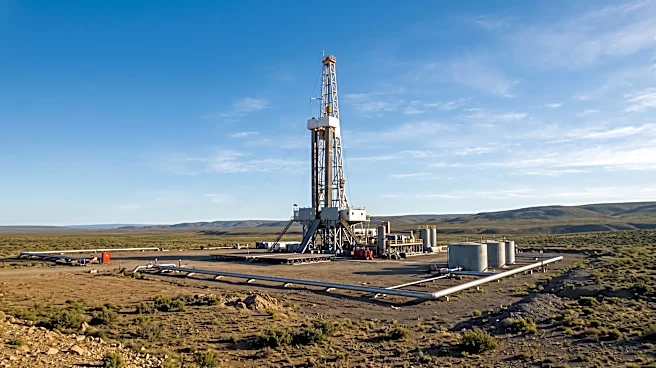
The Vaca Muerta shale formation in Argentina's Patagonia region is experiencing an energy boom, attracting thousands of Argentines seeking employment in the oil and gas sector. President Javier Milei views Vaca Muerta as a potential solution to the country's
chronic economic instability, aiming to generate substantial export dollars. This year, crude oil has surpassed soybean meal as Argentina's primary export. The country now produces over 850,000 barrels of oil daily, a significant increase from a decade ago. This surge is driven by investments and advanced technology, with the government providing fiscal incentives and facilitating fuel exports. However, the rapid development has led to a housing and employment crisis in nearby towns like Añelo, where the mayor has warned against further migration due to limited job availability.
Why It's Important?
The Vaca Muerta project represents a critical juncture for Argentina's economy, offering a pathway to alleviate its financial woes through increased energy exports. The influx of foreign currency could stabilize the peso and reduce inflation, which has plagued the nation for decades. The development also positions Argentina as a more significant player in global energy markets. However, this economic strategy comes with substantial trade-offs. The reliance on fracking raises serious environmental concerns, including pollution and water depletion, particularly for indigenous Mapuche communities who are vocal opponents. Furthermore, the energy and mining sectors, while profitable, create relatively few jobs compared to other industries, leading to social disparities where many struggle with the rising cost of living despite the boom.
What's Next?
The Argentine government is expected to continue its strong support for Vaca Muerta's development, likely through ongoing fiscal incentives and infrastructure projects, such as new gas pipelines. The focus will be on maximizing oil and gas production and exports to boost the national economy. However, the government will also face increasing pressure to address the environmental impacts and social inequalities exacerbated by the boom. This includes managing the influx of workers into towns like Añelo, ensuring fair labor practices, and engaging with indigenous communities regarding their concerns. The long-term sustainability of this economic model will depend on balancing rapid resource extraction with environmental protection and equitable social development.
Beyond the Headlines
The Vaca Muerta phenomenon highlights a deeper societal debate in Argentina about progress, identity, and environmental stewardship. The 'Texas of Argentina' narrative symbolizes a shift towards an industrial, resource-extraction-based future, contrasting with the nation's traditional agricultural image. This transformation brings both opportunity and conflict, as seen in the struggles of Mapuche communities whose ancestral lands are directly impacted by fracking. The personal stories of workers, like those who migrate with only a backpack and a tent, underscore the desperation and hope driving this internal migration. The project also raises questions about the global commitment to transition away from fossil fuels, as Argentina doubles down on them, potentially creating a complex legacy of economic gain alongside environmental and social challenges.