








What's Happening?
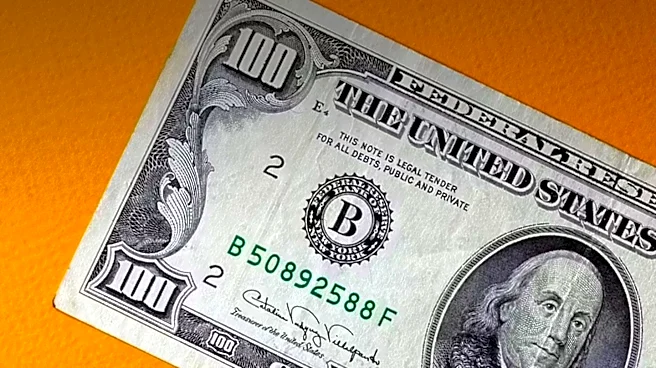
The U.S. dollar is on track for its steepest weekly decline in nearly three months following a disappointing June jobs report. Nonfarm payrolls rose by only 57,000, far below the expected 110,000, leading to a drop in the labor force participation rate
to a five-year low of 61.5%. This has caused traders to lower their expectations for a Federal Reserve interest rate hike in September, with the probability now at 52%, down from 64%. The dollar index has decreased by 0.58% for the week, its largest drop since early April, while U.S. Treasury yields have also fallen.
Why It's Important?
The reduction in rate hike expectations by the Federal Reserve has broad implications for the U.S. economy and global financial markets. A less aggressive monetary policy could support economic growth by keeping borrowing costs lower, which is beneficial for businesses and consumers. However, a weaker dollar can increase import costs and affect international trade dynamics. The shift in market sentiment also impacts currency valuations globally, providing relief to currencies like the yen, which have been under pressure. Investors and policymakers will need to navigate these changes carefully to maintain economic stability.
What's Next?
Future Federal Reserve decisions will hinge on forthcoming economic data, particularly regarding employment and inflation. If economic indicators continue to show weakness, the Fed may opt to delay further rate hikes to support recovery efforts. Market participants will be attentive to any signals from Fed officials about potential policy adjustments. The performance of the U.S. dollar and Treasury yields will remain key indicators for investors, influencing financial strategies and economic outlooks.