






What's Happening?
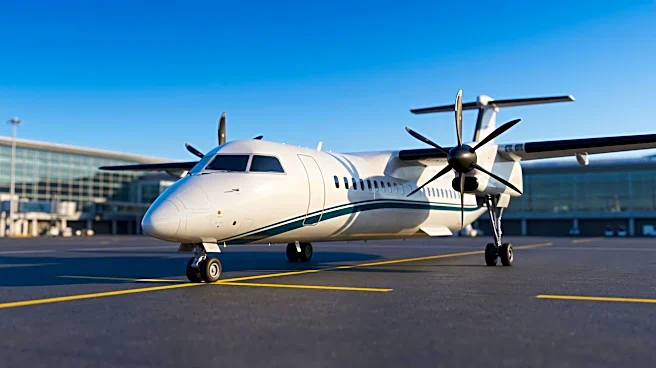
Arjan Meijer, President and CEO of Embraer Commercial Aviation, has voiced doubts regarding the potential for turboprop aircraft to regain a significant presence among U.S. airlines. This skepticism comes as ATR, a competitor, aims to replace aging 50-seat
regional jets with its turboprop models. Meijer specifically cited passenger acceptance as a major hurdle for ATR's ambitions in the U.S. market, stating that 'People don’t like to fly turboprops.' Embraer itself had previously explored a Turboprop Next Generation (TPNG) family, featuring 70- and 90-seat variants designed to reduce cabin noise, but this project was paused in 2022 and subsequently canceled due to the unavailability of suitable engine technology. Meijer suggested that alternatives like the Bombardier CRJ-550, a 50-seat version of a larger jet, offer a better approach for smaller markets by providing more passenger space. He also noted that some airlines are extending the operational lives of their Embraer ERJ145s rather than immediately replacing them.
Why It's Important?
The debate over turboprop viability in the U.S. market has significant implications for regional air travel, aircraft manufacturers, and airline operational strategies. If Embraer's assessment of passenger reluctance towards turboprops holds true, it could limit the options for U.S. airlines seeking cost-effective solutions for regional routes, potentially leading them to continue operating older, less fuel-efficient regional jets or to invest in smaller jet aircraft. This could impact the environmental goals of airlines, as modern turboprops often offer better fuel efficiency and lower carbon emissions compared to older regional jets. For manufacturers like ATR, a lack of widespread U.S. adoption would mean missing out on a substantial market for their aircraft, while Embraer's focus on jet solutions for regional travel would be reinforced. The preference for jet comfort over turboprop efficiency could also influence future aircraft development and investment decisions across the aerospace industry, particularly concerning regional connectivity and fleet modernization in the U.S.
What's Next?
ATR is actively working to overcome the perceived passenger acceptance issue, with its outgoing CEO Nathalie Tarnaud Laude identifying the U.S. as a key growth market for replacing 50-seat aircraft. Public charter operator JSX has already begun flying ATR 42-600s, configured with 30 premium seats, on routes like Santa Monica-Las Vegas, which ATR views as a test of U.S. passenger acceptance. Tarnaud Laude indicated that JSX customers have responded positively to the aircraft. ATR is also exploring a proposed 50-seat, three-class configuration for the ATR 72, designed with a front passenger door compatible with jet bridges, and is assessing development costs and potential airline demand. Discussions with U.S. carriers are ongoing, though no specific customers have been identified. The success of these initiatives and the broader market's response will determine if turboprops can indeed carve out a larger niche in the U.S. regional aviation landscape, potentially influencing future fleet decisions and regional route development.
Beyond the Headlines
The underlying issue of passenger perception versus operational efficiency highlights a broader challenge in the aviation industry: balancing economic and environmental benefits with consumer preferences. While turboprops offer advantages in fuel efficiency and lower operating costs, particularly for shorter regional routes, the 'turboprop controversy' cited by Embraer's CEO suggests a psychological barrier among U.S. travelers. This perception, often linked to older, noisier turboprop models, could hinder the adoption of newer, more advanced turboprops that offer improved comfort and reduced noise. Overcoming this perception would require significant marketing efforts and potentially a shift in how regional air travel is framed to the public. The outcome of this market dynamic could also influence regulatory approaches to regional air service, potentially leading to incentives for airlines to adopt more fuel-efficient aircraft, regardless of propulsion type, or to address passenger concerns through enhanced cabin experiences. This situation underscores the complex interplay between technological advancement, economic realities, and consumer psychology in shaping the future of air transportation.