





What's Happening?
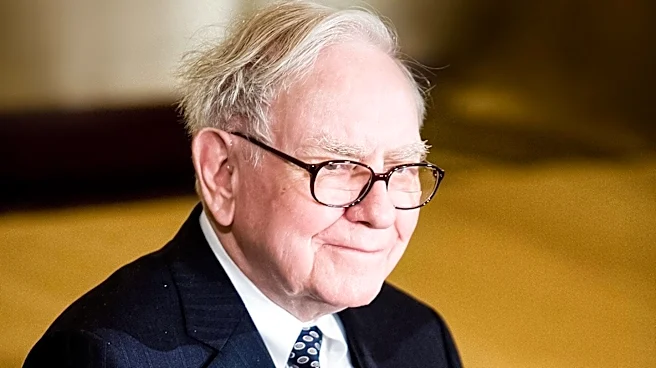
Berkshire Hathaway, under its new CEO Greg Abel, has significantly increased its investment in artificial intelligence (AI) driven stocks, with 41.6% of its $358 billion portfolio now allocated to three major companies utilizing AI. This marks a shift
from former CEO Warren Buffett's historical reluctance to invest heavily in technology. The three companies are Alphabet, Coca-Cola, and Apple. Notably, Greg Abel has aggressively expanded Berkshire's position in Alphabet this year, increasing it sixfold. Alphabet, the parent company of Google, integrates AI into its search functions and offers AI tools through Google Cloud. Coca-Cola leverages AI for marketing, manufacturing, and new product development, having signed a $1.1 billion deal with Microsoft Azure for AI transformation. Apple is focusing on distributing AI to consumers through its 'Apple Intelligence' suite across its vast device ecosystem. These investments highlight a strategic pivot towards companies that are integrating AI to enhance their core businesses.
Why It's Important?
This strategic shift by Berkshire Hathaway under Greg Abel signals a significant endorsement of AI's transformative potential across various industries, even for companies not traditionally considered tech-centric. For U.S. industries, this move by a major investment conglomerate like Berkshire Hathaway could encourage broader adoption and investment in AI technologies. It suggests that AI is no longer just a niche for tech startups but a crucial component for the growth and efficiency of established businesses. Companies that effectively integrate AI into their operations, like Alphabet, Coca-Cola, and Apple, stand to gain substantial investment and market confidence. Conversely, businesses that lag in AI adoption might find themselves at a competitive disadvantage, potentially losing out on investment opportunities and market share. This trend could accelerate the AI arms race, driving innovation and competition in the technology sector and beyond.
What's Next?
The aggressive investment in AI-driven stocks by Berkshire Hathaway is likely to influence other large investment firms and institutional investors to re-evaluate their portfolios for AI exposure. This could lead to increased capital flow into companies demonstrating strong AI integration and innovation. For the three companies in Berkshire's portfolio—Alphabet, Coca-Cola, and Apple—this investment provides a strong vote of confidence and could further bolster their market positions. Alphabet's Google Cloud, with its $561 billion order backlog, is poised for continued growth as more data centers come online to meet demand for AI tools. Coca-Cola's ongoing AI transformation through its Microsoft Azure partnership will likely yield new efficiencies and product innovations. Apple's 'Apple Intelligence' suite is expected to expand its consumer AI offerings, potentially solidifying its dominance in the consumer tech market. Future earnings reports from these companies will be closely watched for the impact of their AI strategies and Berkshire's increased stake.
Beyond the Headlines
The shift in Berkshire Hathaway's investment strategy under Greg Abel reflects a broader evolution in how traditional value investors perceive technology and growth. Warren Buffett's long-standing philosophy focused on 'durable moats' and 'consistent profits,' often shying away from rapidly evolving tech sectors. However, the current investments suggest that AI is now seen as a fundamental driver of durability and profitability, even for non-tech giants like Coca-Cola. This could redefine what constitutes a 'value investment' in the modern economy, incorporating technological innovation as a key criterion. The ethical and societal implications of widespread AI adoption, such as job displacement, data privacy, and algorithmic bias, will also become increasingly relevant as AI permeates more aspects of business and daily life. Berkshire's move underscores the idea that AI is not merely a technological trend but a foundational change impacting economic structures and investment paradigms.