






What's Happening?
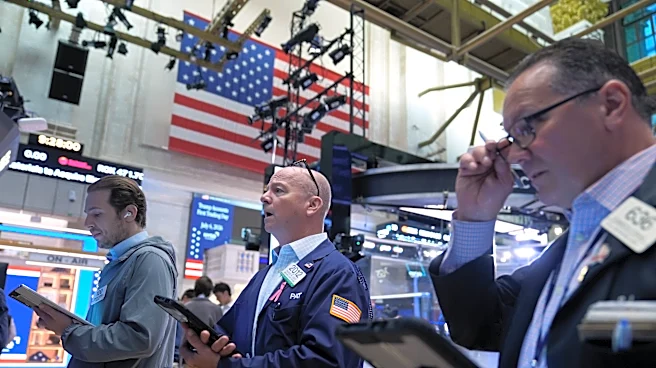
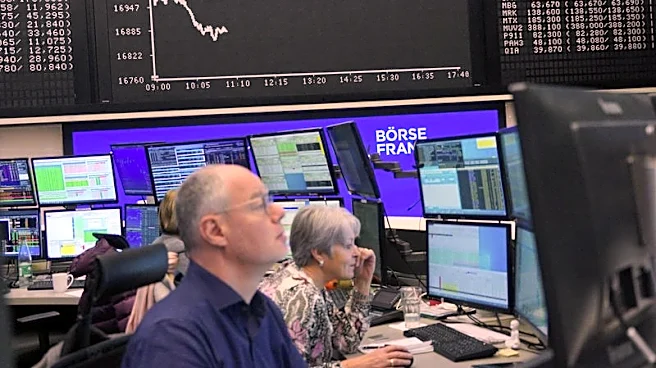
The S&P 500 futures showed signs of stabilization after a challenging trading session marked by a sharp increase in oil prices and disappointing earnings from major companies. The futures rose by 0.2%, while the Nasdaq-100 futures increased by 0.1%. The Dow
Jones Industrial Average futures led the gains with a 0.4% rise. This recovery follows a significant drop in the Dow by over 500 points, marking its fifth negative day in six sessions. The S&P 500 and Nasdaq also experienced their worst one-day performances since June 23, with declines of 1.2% and 2.2%, respectively. The market's recovery was supported by Intel's strong quarterly results, which exceeded Wall Street expectations with a 25% revenue growth, the highest since 2011. Additionally, the recent surge in oil prices began to ease, with Brent crude futures dropping to around $97 per barrel.
Why It's Important?
The stabilization of the S&P 500 futures is significant as it indicates a potential recovery in investor confidence following a period of volatility driven by external factors such as oil price fluctuations and geopolitical tensions. The strong performance of Intel highlights the resilience of certain sectors within the market, providing a counterbalance to the negative impacts from other areas. The easing of oil prices could alleviate some pressure on the broader market, potentially leading to a more stable trading environment. This development is crucial for investors and stakeholders who are navigating the current economic landscape, as it may influence future investment strategies and market expectations.
What's Next?
Looking ahead, market participants will likely focus on upcoming earnings reports from other major companies to gauge the overall health of the corporate sector. Additionally, geopolitical developments, particularly in the Middle East, could continue to impact market dynamics. Investors will also be monitoring any policy decisions or statements from U.S. leadership that could affect economic conditions. The potential for further fluctuations in oil prices remains a key factor to watch, as it could influence both market sentiment and economic forecasts.