





What's Happening?
AI mirrors, smart mirrors, and interactive retail screens are transforming physical retail by integrating artificial intelligence, computer vision, and augmented reality to offer personalized customer experiences. These advanced mirrors can analyze visual
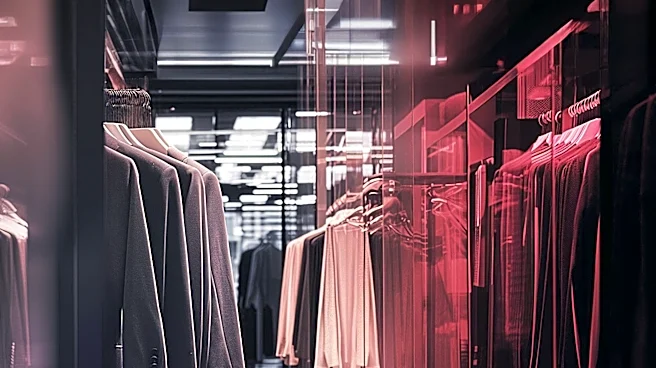
inputs, recommend products, facilitate virtual try-ons, and generate tailored content, moving beyond traditional digital signage that displays uniform content to all shoppers. This technology allows for real-time product discovery and comparison, streamlining the shopping process. For instance, an AI mirror can suggest lipstick shades based on a customer's features, enable virtual try-on, and then guide them to the physical product. Similarly, in fashion, these mirrors help shoppers explore relevant clothing styles and complete looks before entering a fitting room. This innovation aims to merge the personalization benefits of e-commerce with the experiential advantages of in-person shopping, making physical retail more intelligent and interactive.
Why It's Important?
The integration of AI mirrors into physical retail spaces is significant because it addresses a long-standing challenge in brick-and-mortar stores: delivering the same level of personalization found in online shopping. By offering virtual try-ons and AI-powered recommendations, retailers can enhance customer engagement, improve product discovery, and support purchase decisions. This technology is particularly impactful in sectors like fashion, beauty, and eyewear, where customers often need assistance in choosing from a wide array of products. For businesses, this means a new way to make stores, beauty counters, and fitting rooms more interactive and measurable, potentially leading to increased sales and reduced return rates. The ability to track metrics like activations, try-on sessions, and explored products provides valuable insights into customer behavior, which was traditionally harder to obtain in physical retail. This shift allows retailers to differentiate themselves, attract new customer segments, and adapt to evolving shopping behaviors, ensuring a competitive advantage in a dynamic market.
What's Next?
The future will likely see a broader adoption of AI mirrors and similar interactive technologies across various retail sectors. As the technology matures, it is expected to move beyond experimental installations to become practical tools for personalization, product discovery, and assisted selling. Retailers will continue to explore how these systems can enhance the role of retail staff, providing them with additional visual information and tools for more personalized consultations. The focus will be on integrating these capabilities seamlessly into existing storefronts and shopping journeys, avoiding friction for customers. Furthermore, advancements in AI clothing try-on will allow shoppers to digitally explore multiple looks before physically trying on items, making the discovery process more efficient. The industry will also likely see more sophisticated data analytics derived from these interactive experiences, enabling retailers to refine their strategies and optimize store layouts and product offerings based on real-time customer engagement data.
Beyond the Headlines
Beyond the immediate commercial benefits, the widespread adoption of AI mirrors in retail raises deeper implications regarding the nature of consumer interaction and privacy. While these mirrors offer enhanced personalization, they also collect significant amounts of visual and behavioral data. This necessitates robust ethical guidelines and transparent data handling practices to ensure consumer trust and privacy. The technology could also reshape consumer expectations, making static, non-interactive shopping experiences feel outdated. Culturally, it might further blur the lines between the physical and digital worlds, influencing how individuals perceive and interact with products and brands. The long-term shift could lead to a retail environment where every physical interaction is augmented with digital intelligence, creating a highly personalized, yet potentially less spontaneous, shopping journey. This evolution will require a careful balance between technological advancement and maintaining the human element of retail.